

Quick answer
All Mount Rinjani treks must be arranged through a licensed trekking company affiliated with the park authority and accompanied by a certified guide holding a valid TNGR permit. Independent trekking is prohibited. Licensed operators register trekkers at park gates in Senaru or Sembalun between 08:00 and 16:00 daily, submit manifest data to park management, and coordinate porter assignments under national labor standards. The conservation fee of 150,000 IDR per person per day is collected during registration and remitted to park operations.
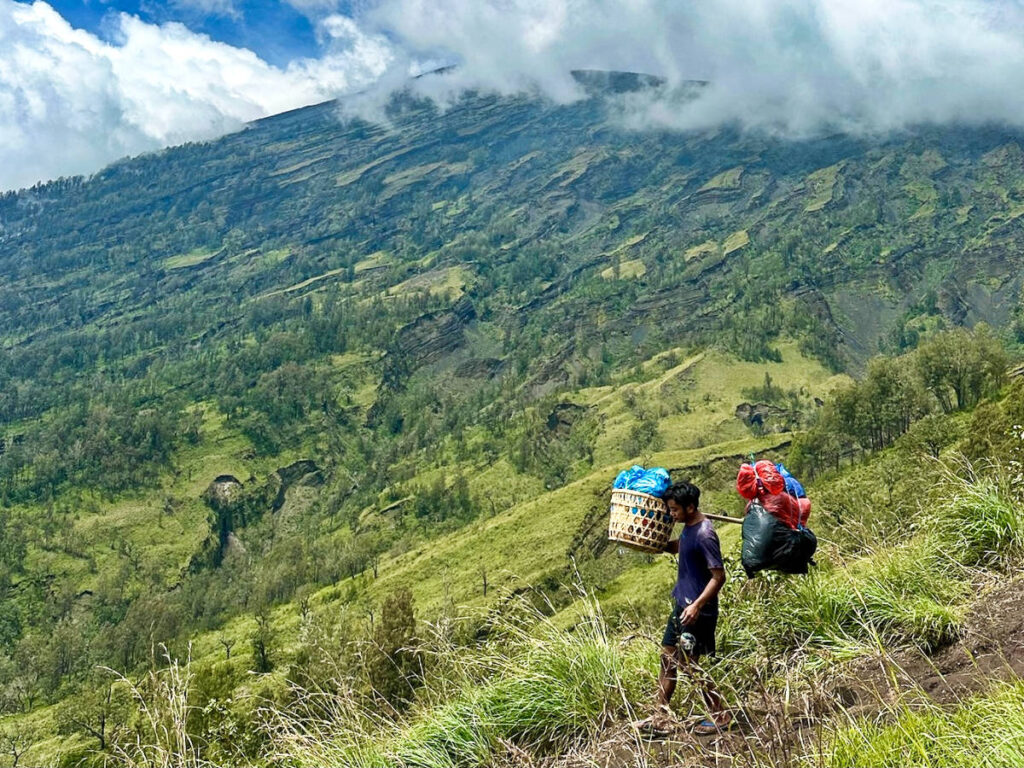
Mount Rinjani National Park enforces a mandatory guide policy that has been in effect since 2009, requiring all trekkers to contract with a licensed operator before entry. The regulation emerged after several high-profile rescues of independent hikers and serves both safety and ecological monitoring functions. Licensed companies hold annual permits issued by the park authority and submit client manifests for every trek, creating an auditable record of visitor traffic and enabling rapid response during emergencies. Verifying a mount rinjani trekking company's credentials requires checking three documents: the operator's TNGR business permit, the assigned guide's certification card, and proof of insurance coverage. Legitimate operators display permit numbers on their websites and provide copies upon request. Guides must carry laminated ID cards issued by the Indonesian Mountain Guide Association, renewed annually after competency evaluations. Insurance policies should cover emergency evacuation by helicopter from crater rim elevations above 2,600 meters, a service that costs upwards of 50 million IDR when procured independently. The distinction between Senaru-based and Sembalun-based agencies often reflects logistical networks rather than service quality. Senaru operators maintain closer relationships with northern trailhead porters and typically offer lower rates for shorter summit-only itineraries. Sembalun agencies coordinate more frequently with eastern crater rim camps and structure pricing around longer circuits that descend via Senaru. Both communities train guides through the same certification program and adhere to identical park regulations. Porter welfare standards became mandatory in 2018 after advocacy by international trekking organizations. Licensed operators now limit porter loads to 25 kilograms, provide proper footwear and rain gear, and guarantee minimum wages indexed to trek duration. These requirements increased package costs by approximately fifteen percent but reduced injury rates among porters by over forty percent within two years. Agencies that advertise suspiciously low rates often achieve those prices by violating load limits or hiring uncertified assistants. Park registration occurs at gated entry points where rangers verify each trekker's booking confirmation, collect the conservation fee, and issue wristbands that correspond to planned exit dates. This process typically requires twenty to thirty minutes during peak morning hours. Choosing a mount rinjani trekking company with established gate relationships reduces registration delays and ensures accurate manifest submission, which becomes critical if weather forces itinerary changes or early descent.
“Licensed operators display permit numbers on their websites and provide copies upon request, while guides must carry laminated ID cards issued by the Indonesian Mountain Guide Association.”
Getting to Mount Rinjani Trekking Company Trailheads
Mount Rinjani National Park is reached via Lombok, with two main gateway villages, Senaru to the north and Sembalun to the east, each serving as a trailhead for the ascent. Most visitors fly into Lombok International Airport (Praya) and travel overland to whichever village matches their planned route.
Lombok International Airport to Sembalun via Pusuk Pass / Aikmel road
Lombok International Airport to Senaru via Mataram and Bayan
Bemo/public minibus, Mataram (Terminal Mandalika) to Bayan, then local transport to Senaru
Metered or app-based taxi, Airport to Senggigi or Mataram, then onward charter to trailhead
Senaru village to Senaru gate (RTC checkpoint)
Mount Rinjani Trekking Company Registration Hours
Registration posts at both the Senaru and Sembalun trailheads keep the same daily window, with no rest day built into the schedule.
| Monday | 08:00 – 16:00 | |
|---|---|---|
| Tuesday | 08:00 – 16:00 | |
| Wednesday | 08:00 – 16:00 | |
| Thursday | 08:00 – 16:00 | |
| Friday | 08:00 – 16:00 | |
| Saturday | 08:00 – 16:00 | |
| Sunday | 08:00 – 16:00 |
How to Book a Mount Rinjani Trekking Company Step by Step
Booking a licensed Mount Rinjani trekking company involves verifying permits, selecting a registered operator, and coordinating your trailhead arrival. The process takes 2–7 days depending on peak season availability and permit processing.
Research licensed trekking operators
Check that the company holds a valid TNGR (Taman Nasional Gunung Rinjani) permit and employs certified guides. Many unregistered operators skip insurance and emergency protocols, leaving trekkers without recourse if plans change.
Confirm trek package inclusions
Verify that the quoted package covers park entrance fees, porter services, meals, camping equipment, and guide wages. Operators occasionally advertise low base rates but add these costs at the trailhead, inflating your total spend.
Submit passport and travel dates
Provide a scanned copy of your passport and intended trek dates so the operator can process your TNGR registration in advance. Late submissions during high season (July–August) often result in permit backlogs that delay your start.
Arrange trailhead transfer and timing
Coordinate pickup from your Lombok accommodation to reach Senaru or Sembalun between 08:00–10:00, aligning with park registration hours. Operators typically handle this transport, but confirm departure time the day before to avoid missing the registration window.
Receive final briefing and gear check
Meet your guide at the trailhead for a safety briefing and equipment inspection before registration. This is your last chance to address missing gear or adjust the itinerary based on current weather and trail conditions.
Best Time to Use a Mount Rinjani Trekking Company
The dry season from April to November is the workable window for a Mount Rinjani trekking company to run summit and crater rim routes, since the park is closed outright from January 1 to March 31 for monsoon safety and ecosystem recovery. Within that window, arriving at the trailhead between 08:00 and 10:00 keeps you ahead of midday heat and the cloud cover that typically builds over the caldera by afternoon.
January to March
No trekking, park closedHeavy monsoon rain, trails unsafe
TNGR closes the entire park annually for ecosystem recovery, so no operator runs treks in this period.
April to May
Moderate, trails reopeningWarm days, occasional rain, mid-20s to low-30s C
Early dry season with clearer skies returning but trails can still be muddy from the closure period.
June to August
Peak crowds, book aheadDriest, coolest at altitude, single digits C overnight at summit
The most reliable weather window and the busiest months for trekking companies, with cold nights near the crater rim.
September to November
Busy, tapering toward wet seasonHot and dry, low clouds building by afternoon
Good visibility in the morning hours but afternoon cloud cover over the caldera becomes more frequent later in this stretch.
Daily arrival 08:00-10:00
——
Starting within this window lets trekkers clear exposed ridgelines before midday heat and before afternoon cloud typically rolls in over the crater.
Verdict: June to August, arriving at the trailhead between 08:00 and 10:00, gives the most consistent dry, clear conditions for a Mount Rinjani trekking company to work with.
A Realistic Mount Rinjani Trekking Company Itinerary
Most trekking companies run a two-day, one-night crater-rim route or a three-day, two-night summit route. Both start from Senaru or Sembalun and require a registered guide.
Register and Begin Ascent
Register at the trailhead by 10:00, then trek through tropical forest and open grassland toward Senaru Crater Rim (6–7 hours). Porters carry camping gear and meals.
Crater Rim Camp Setup
Arrive at the rim camp around 15:00–16:00, set up tents, and watch sunset over the caldera lake. Dinner is prepared by the support team.
Summit Push (3-Day Route Only)
On the summit extension, wake at 02:00 and climb to the 3,726 m peak in time for sunrise (2–3 hours up, steep scree). Descend to crater rim for breakfast.
Descend to Trailhead
Break camp after breakfast and hike back down to Senaru or across to Sembalun (5–6 hours). Most groups finish by early afternoon.
Mount Rinjani Trekking Company Pre-Trek Checklist
Complete these steps before your trek to ensure permits, gear, and fitness expectations are in order.
-
Verify operator holds TNGR-issued guiding license — All treks require a licensed guide; unlicensed operators cannot legally enter the park.
-
Confirm operator arranges TNGR conservation fee payment — The 150,000 IDR per-person-per-day fee is mandatory and collected at the trailhead registration post.
-
Pack insulated layers and waterproof shell for summit — Temperatures drop to near-freezing at 3,726 m; exposed summit conditions require wind and rain protection.
-
Test hiking boots on multi-hour walks beforehand — Steep volcanic scoria and long descents cause blisters if boots are not broken in.
-
Train for 6–8 hour trekking days with loaded pack — Multi-day itineraries involve sustained ascent and descent with 10–15 kg pack weight.
-
Confirm registration cut-off time with your operator — Most operators register 08:00–10:00 to start before midday heat and afternoon cloud cover obscure the trail.
Mount Rinjani Trekking Company Rules and Etiquette
Mount Rinjani National Park enforces strict trekking regulations to protect the fragile volcanic ecosystem and respect Sasak cultural sites. All visitors must comply with guide requirements and waste management rules.
Do
- Hire a licensed guide from registered trekking companies — solo trekking is prohibited
- Pack out all waste including organic matter and toilet paper
- Respect sacred sites near Segara Anak crater lake and follow guide instructions
- Register at park entrance between 08:00–10:00 to start before midday heat
- Use designated camping zones and follow porter load limits set by park authority
Don't
- Attempt to trek without a licensed guide or registered operator
- Leave any waste on the mountain including food scraps or biodegradables
- Approach or disturb sacred Sasak ceremony sites around the crater lake
- Start your trek after 10:00 without accounting for afternoon cloud cover
- Bring single-use plastics or non-biodegradable packaging into the park
Check availability
FAQs: Mount Rinjani Trekking Company & Park Logistics
Everything you need to know about mount rinjani trekking company