48 h
Mount Rinjani Summit Trek – 2 Days
- Guía local experto
- Grupo reducido
- Acceso sin colas
- Cancelación gratuita
Guided multi-day ascents from Senaru and Sembalun, conservation-compliant itineraries
Compara tarifas y elige la que más te convenga — todas las reservas incluyen bono móvil y cancelación gratuita donde se indica.
48 h
48 h
48 h
Choosing the right mount rinjani trekking package starts with matching your route to your goals, since Rinjani National Park's official access tiers differ mainly by duration, campsites, and whether crater lake and hot springs are included alongside the summit push.
| 2-Day Sembalun Summit Summit-only route |
Top pick 3-Day Sembalun-Torean Crater lake & hot springs |
|
|---|---|---|
| Route | Sembalun trailhead to summit and back | Sembalun to Torean via crater rim |
| Duration | 2 days, 1 night | 3 days, 2 nights |
| Summit attempt | ✓ 3,726 m via Sembalun | ✓ 3,726 m via Sembalun |
| Crater lake access | — | ✓ Segara Anak lake shoreline |
| Hot springs access | — | ✓ Aik Kalak hot springs |
| Porters & meals included | ✓ Full board with porters | ✓ Full board with porters |
| Physical difficulty | Strenuous, steep summit night hike | Strenuous, longer trek with descent to lake |
| Best for | Time-limited summit-focused trekkers | First-timers wanting the fuller Rinjani experience |
| See tickets & prices |
Worth it for fit trekkers seeking summit sunrise
A mount rinjani trekking package is worth it if you're prepared for the physical challenge and want Indonesia's most dramatic volcanic landscape. The 150,000 IDR per-person daily TNGR conservation fee stacks across multi-day treks—2-day summit routes focus on the 3,726-meter crater rim at dawn, while 3-day expeditions add the turquoise Segara Anak crater lake and natural hot springs below. You're paying for guided ascents through montane forest, porter support, meals, and camping gear across steep elevation gain. The summit sunrise over Lombok, Bali, and Sumbawa delivers on the effort for most trekkers. Skip it if you're not accustomed to 6-8 hour trekking days or altitude—this isn't a casual hike. The mount rinjani trekking package tours range from basic 2-day climbs to fuller 3-day crater explorations, with prices reflecting porter ratios, meal quality, and group size. Value peaks when you're fit enough to enjoy the summit without suffering and genuinely want the volcanic caldera experience.
Bottom line: Book a mount rinjani trekking package if you're fit, committed to the summit push, and want one of Southeast Asia's most rewarding volcanic treks.
Most Lombok-versus-Java trip planners weigh a Mount Rinjani trekking package against a Mount Bromo sunrise tour, and the honest answer is they suit different travelers: Rinjani rewards multi-day stamina, Bromo rewards a single early morning. Bromo's jeep-and-viewpoint format is the faster alternative to any Gunung Rinjani hiking itinerary if time is short.
|
Top pick Mount Rinjani |
Mount Bromo Sunrise Tour | |
|---|---|---|
| What you approach | Active volcanic crater, caldera lake (Segara Anak) | Active volcano crater viewed from Penanjakan viewpoint |
| How you get there | Multi-day trek from Senaru or Sembalun trailhead | 4WD jeep from Cemoro Lawang or Probolinggo |
| Physical intensity | High — steep ridgelines, summit push at altitude | Low — mostly viewpoint walking, short sand-sea hike |
| Typical duration | 2–4 days on the mountain | 1 sunrise outing, roughly 4–6 hours |
| Entrance/conservation fee | 150,000 IDR per person per day (TNGR fee) | Around 220,000–320,000 IDR park entry (weekday/weekend) |
| Best season | Dry season, April to December | Dry season, April to October, best visibility |
| Who it suits | Trekkers wanting a summit and lake camp experience | Travelers wanting volcanic scenery without overnight trekking |
| Booking constraints | Requires porter/guide team, advance multi-day booking | Jeep tours bookable last-minute, shared or private |
| Gear needed | Trekking boots, cold-weather layers, camping gear | Light jacket, no specialized gear required |
| See tickets & prices |
Verdict: Choose the Mount Rinjani trekking package for a demanding multi-day summit and crater-lake experience, and choose Bromo when a single sunrise outing fits the trip better.
Experiencias seleccionadas amadas por miles de viajeros
3 days
Cancelación gratuita
Conquer Indonesia's second-highest volcano on this challenging 3-day expedition to Rinjani's peak
3 days
Cancelación gratuita
Conquer Indonesia's iconic volcano on a thrilling 3-day expedition to the peak, crater lake, and geothermal springs
3 days
Cancelación gratuita
Three-day ascent to Indonesia's legendary 3,726m volcano with crater lake, hot springs & rainforest wildlife
2 days
Cancelación gratuita
Conquer Indonesia's second-highest peak on this intense 2-day climb through savanna and volcanic terrain
3 days
Cancelación gratuita
Conquer Indonesia's second-highest volcano, soak in hot springs, and descend through dramatic valleys
3 days
Cancelación gratuita
Conquer Indonesia's second-highest volcano with crater lake views, hot springs, and unforgettable sunrise
2 days
Cancelación gratuita
Beginner-friendly mountain camping adventure with sunrise summit views over Lombok and Bali
1 day
Cancelación gratuita
Scale one of Indonesia's most iconic volcanoes on a guided expedition to the summit and pristine crater lake
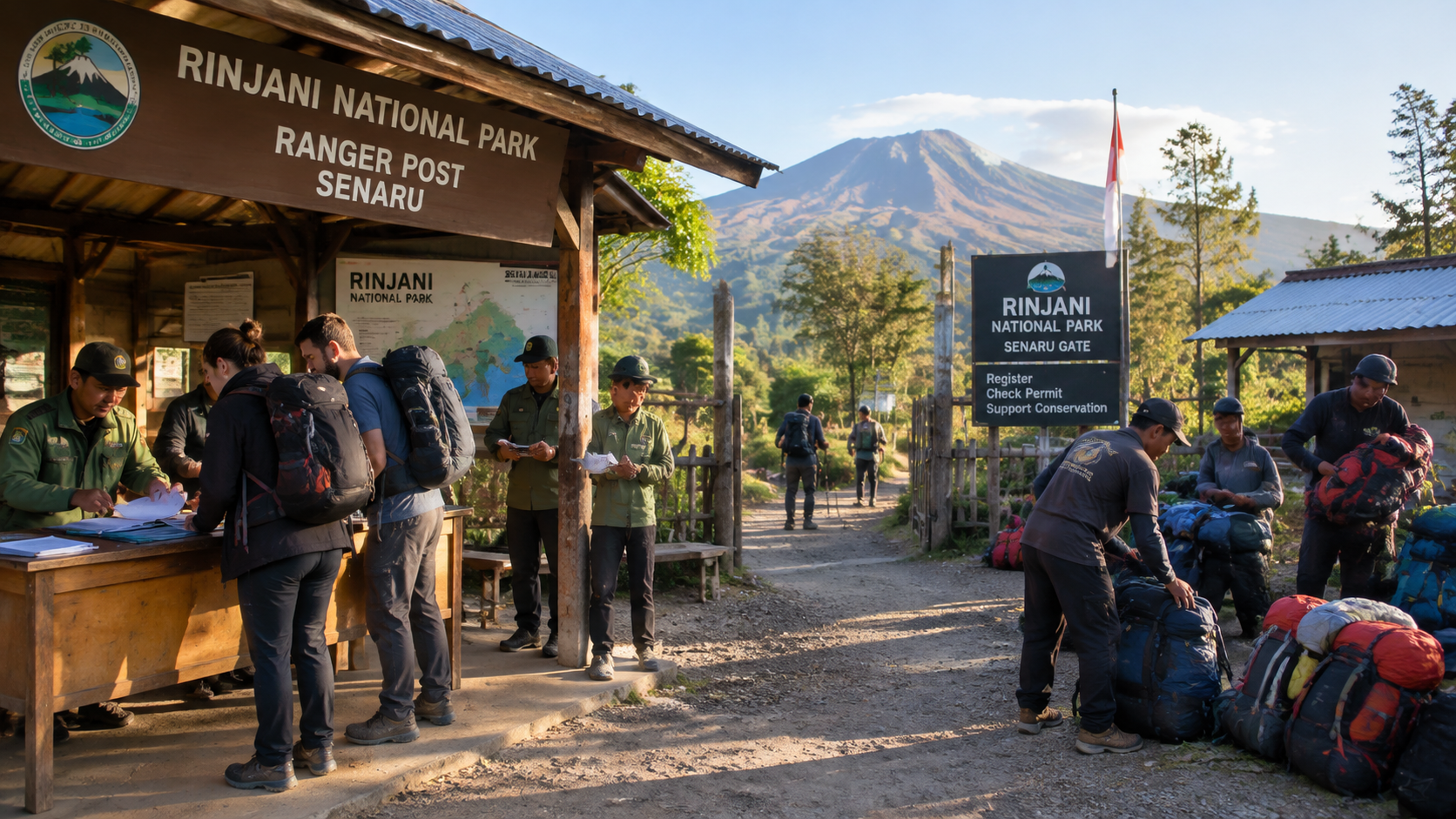
Guides check permits and porters organize loads at the Senaru or Sembalun ranger post
Ascend through rainforest and savanna grassland to the crater rim camp
Optional route down to the crater lake for hot springs and fishing
Depart camp before dawn for the push to the 3,726m summit ridge
Descend back to Senaru or Sembalun village to conclude the trek
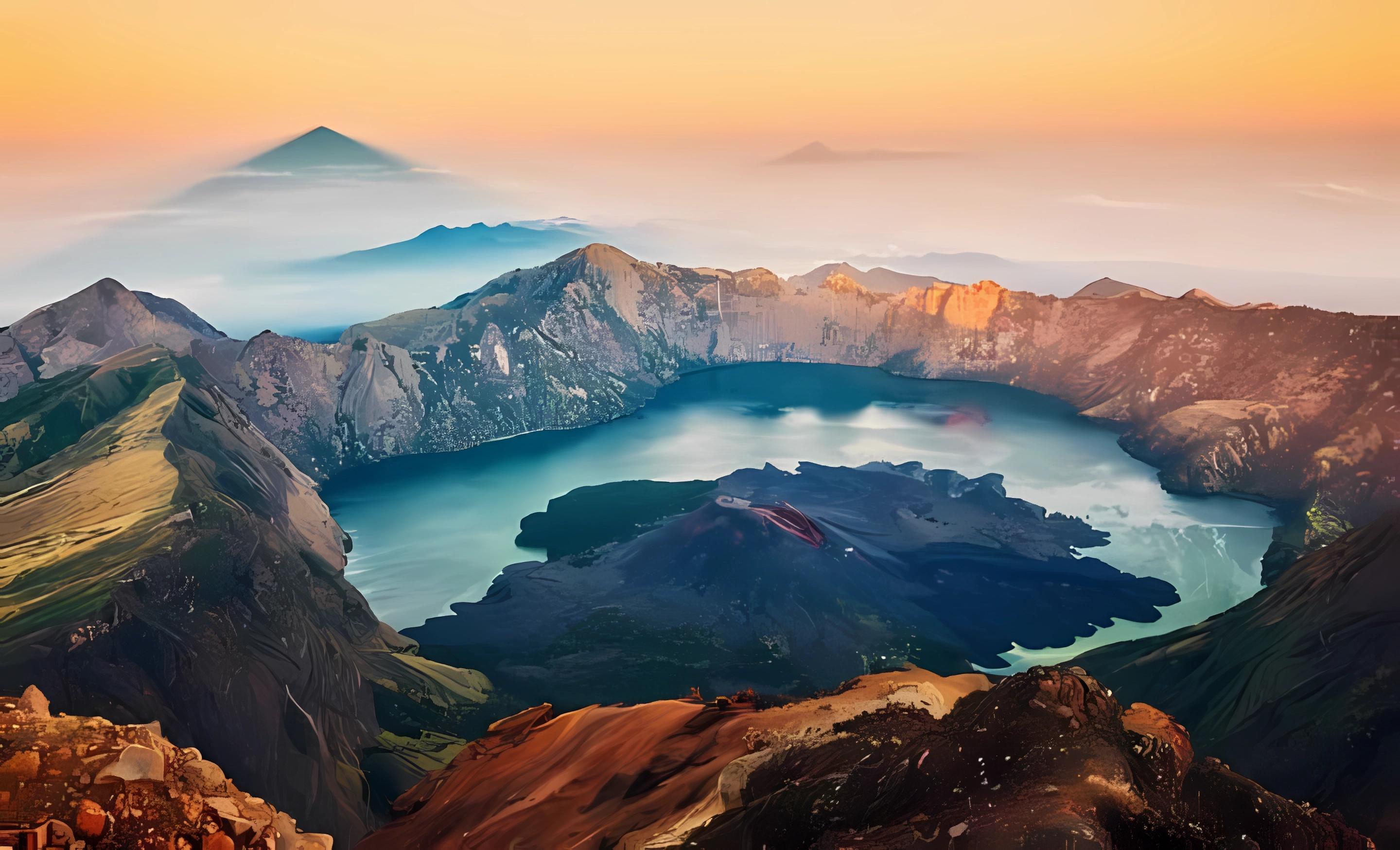
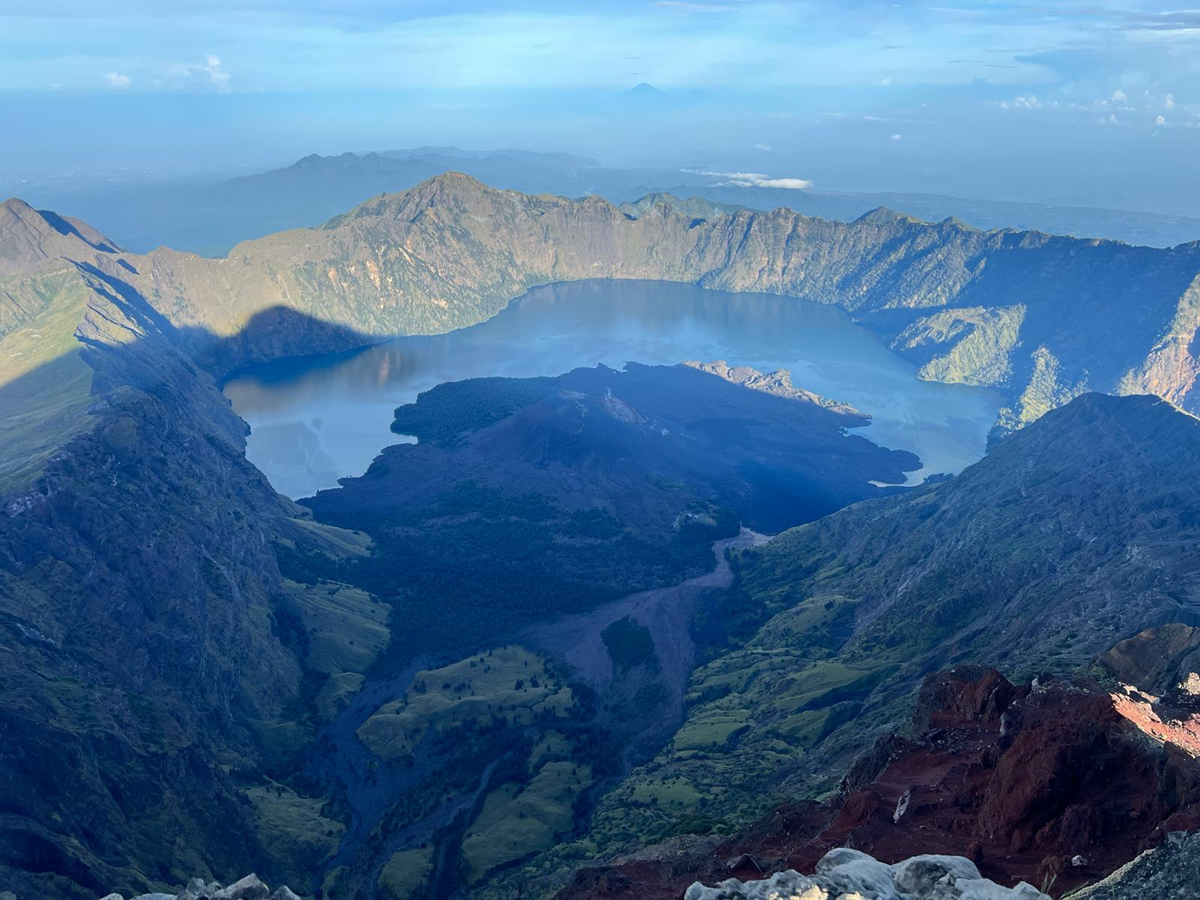
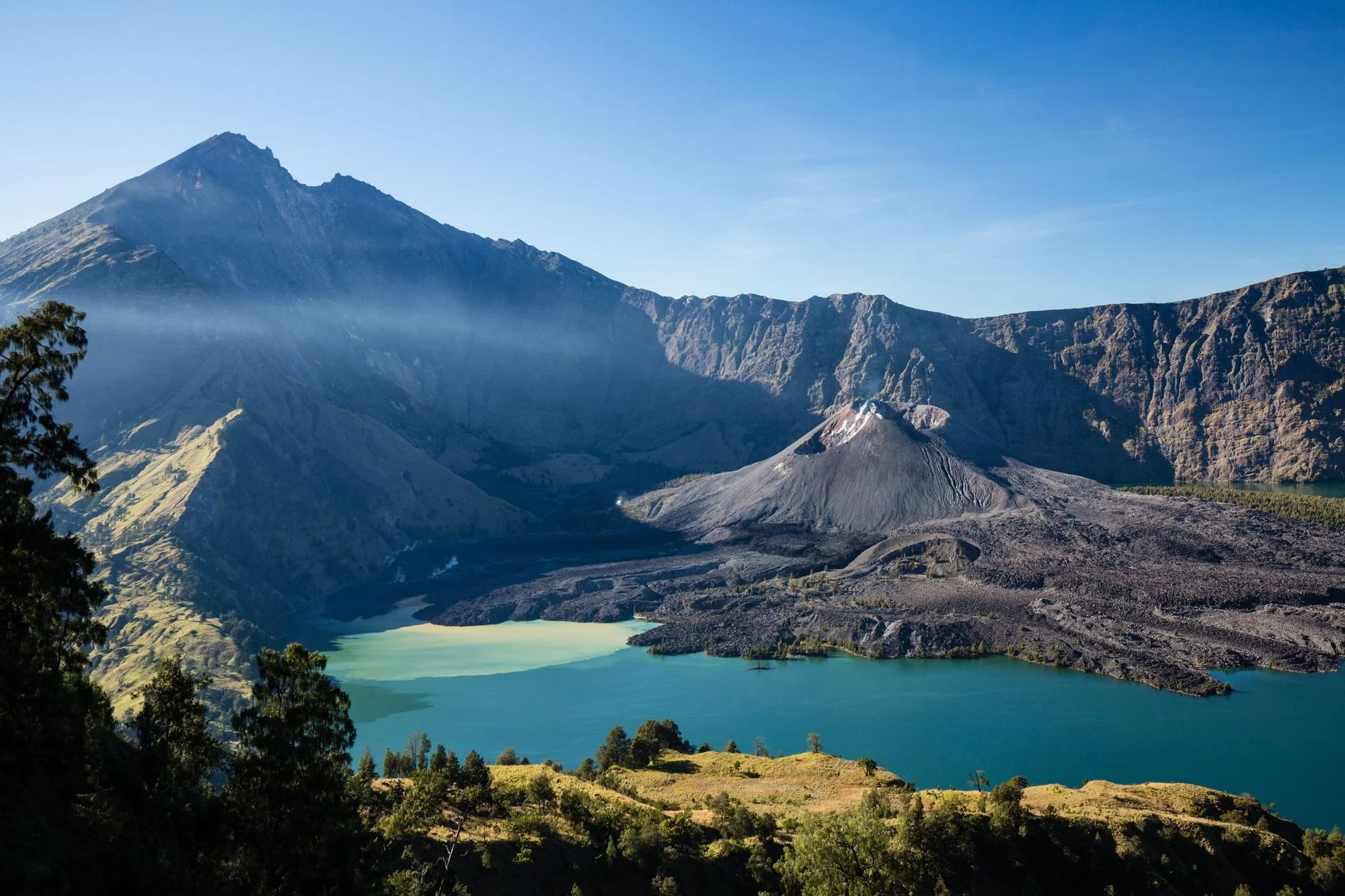
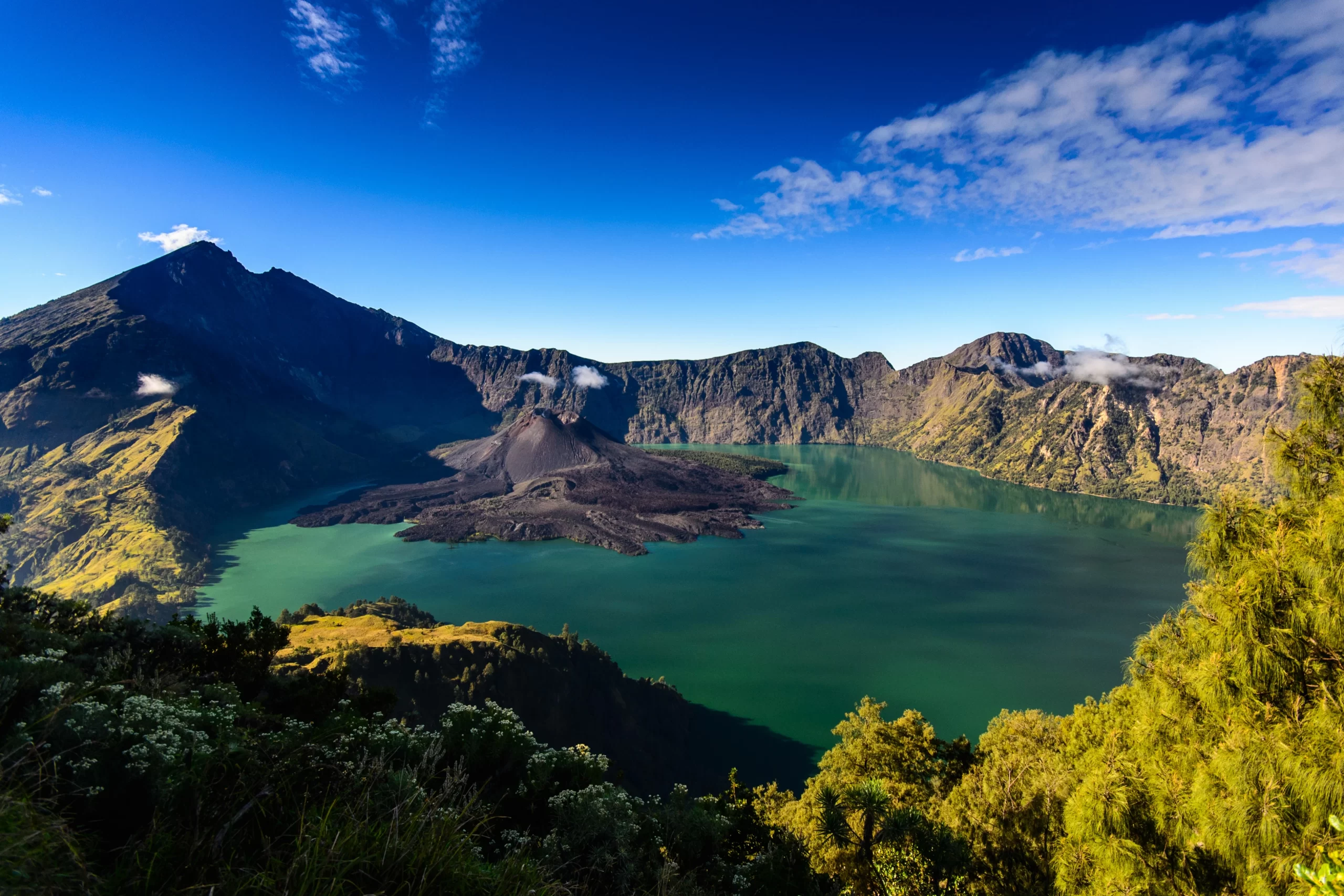
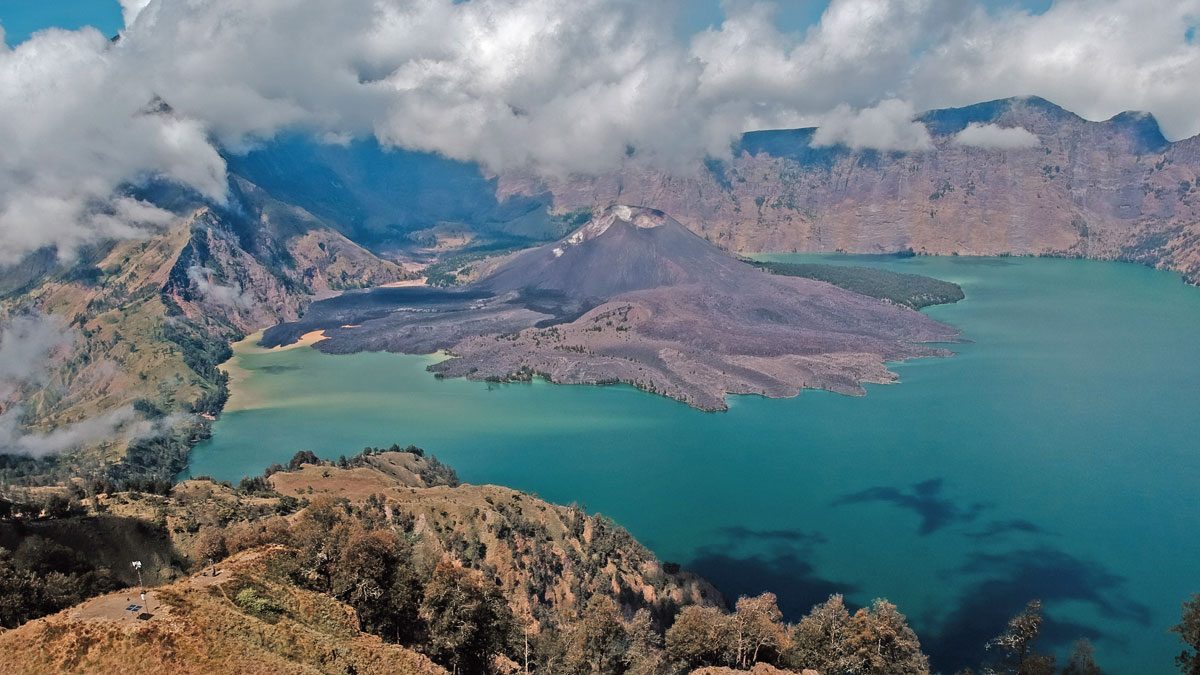
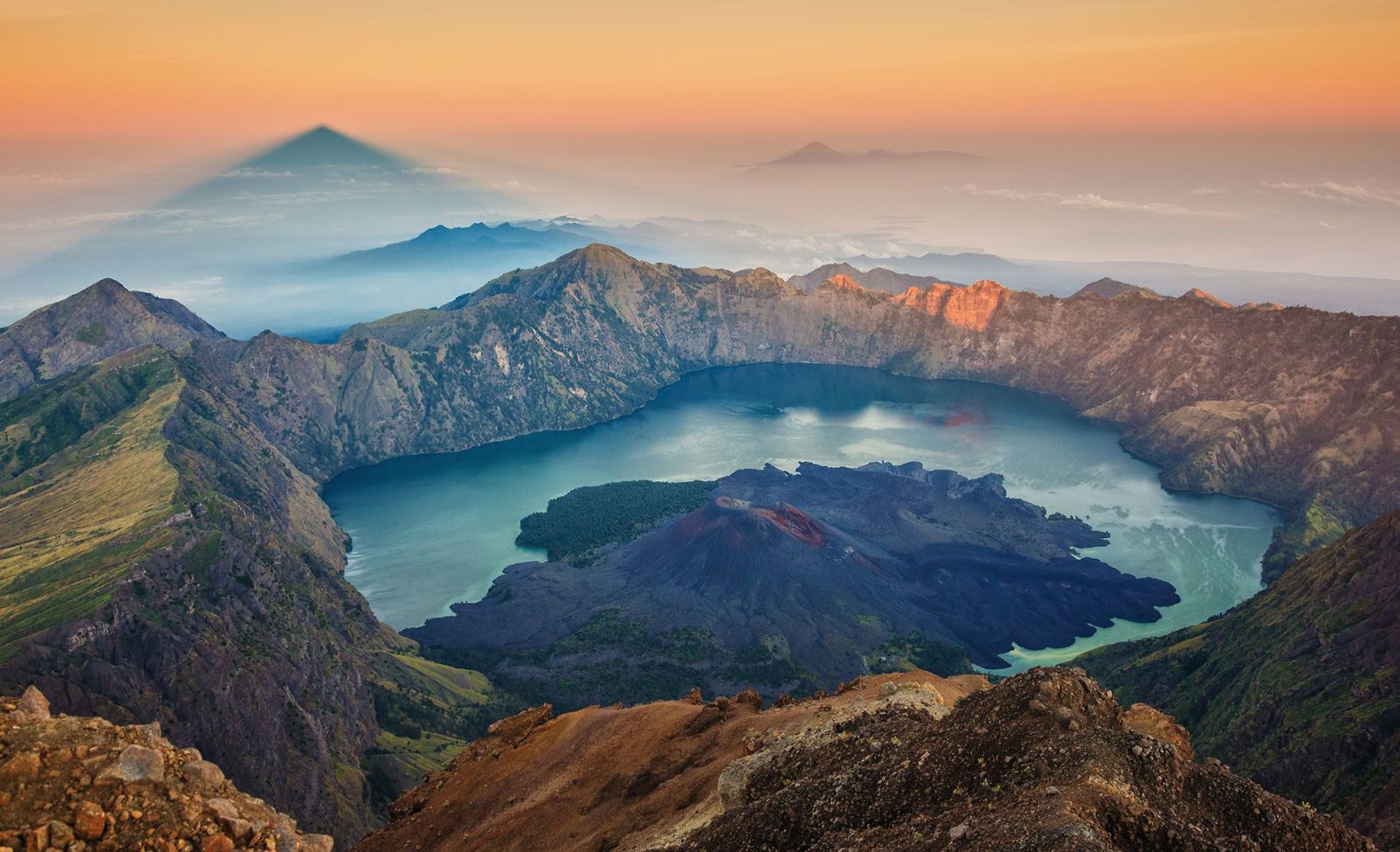
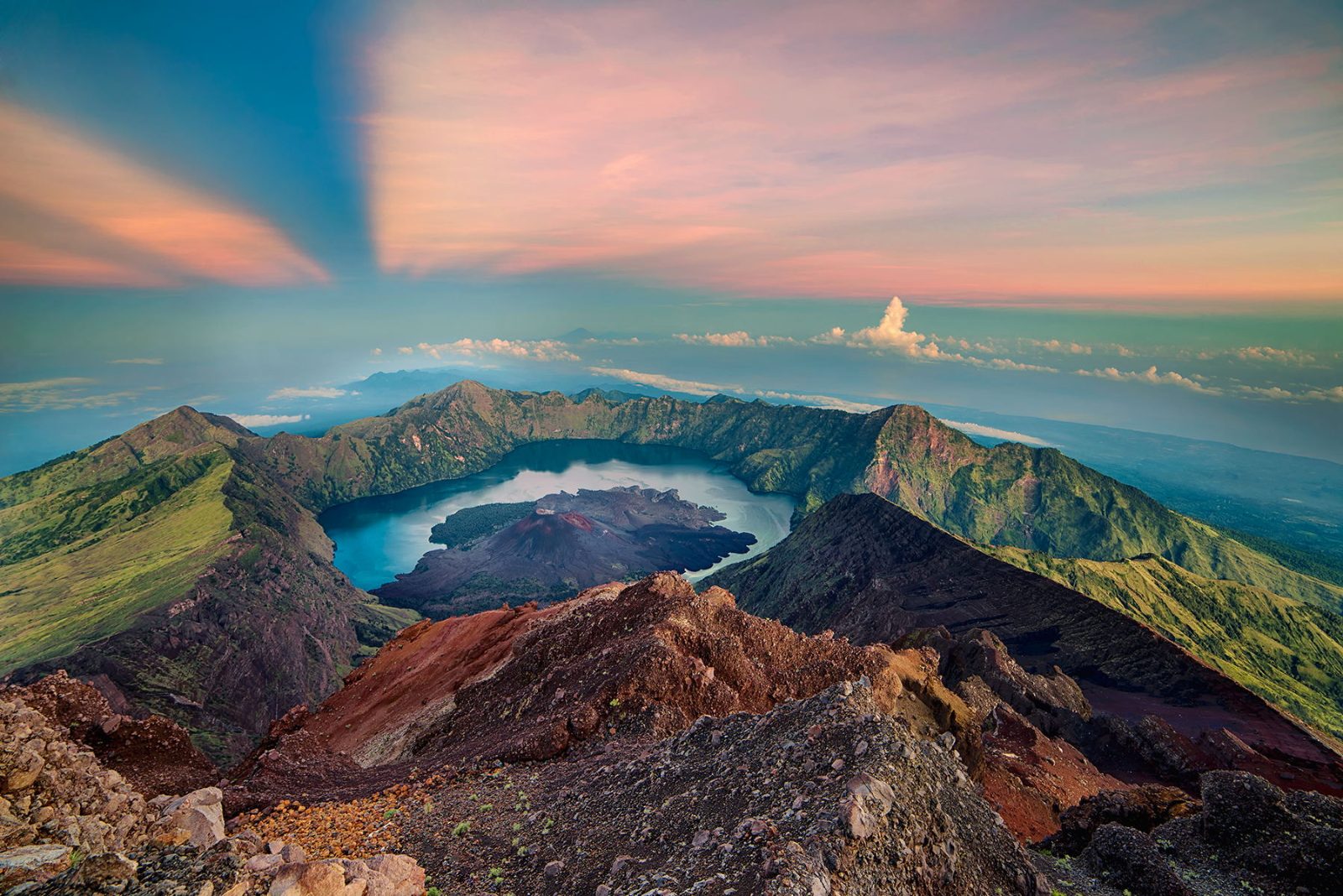
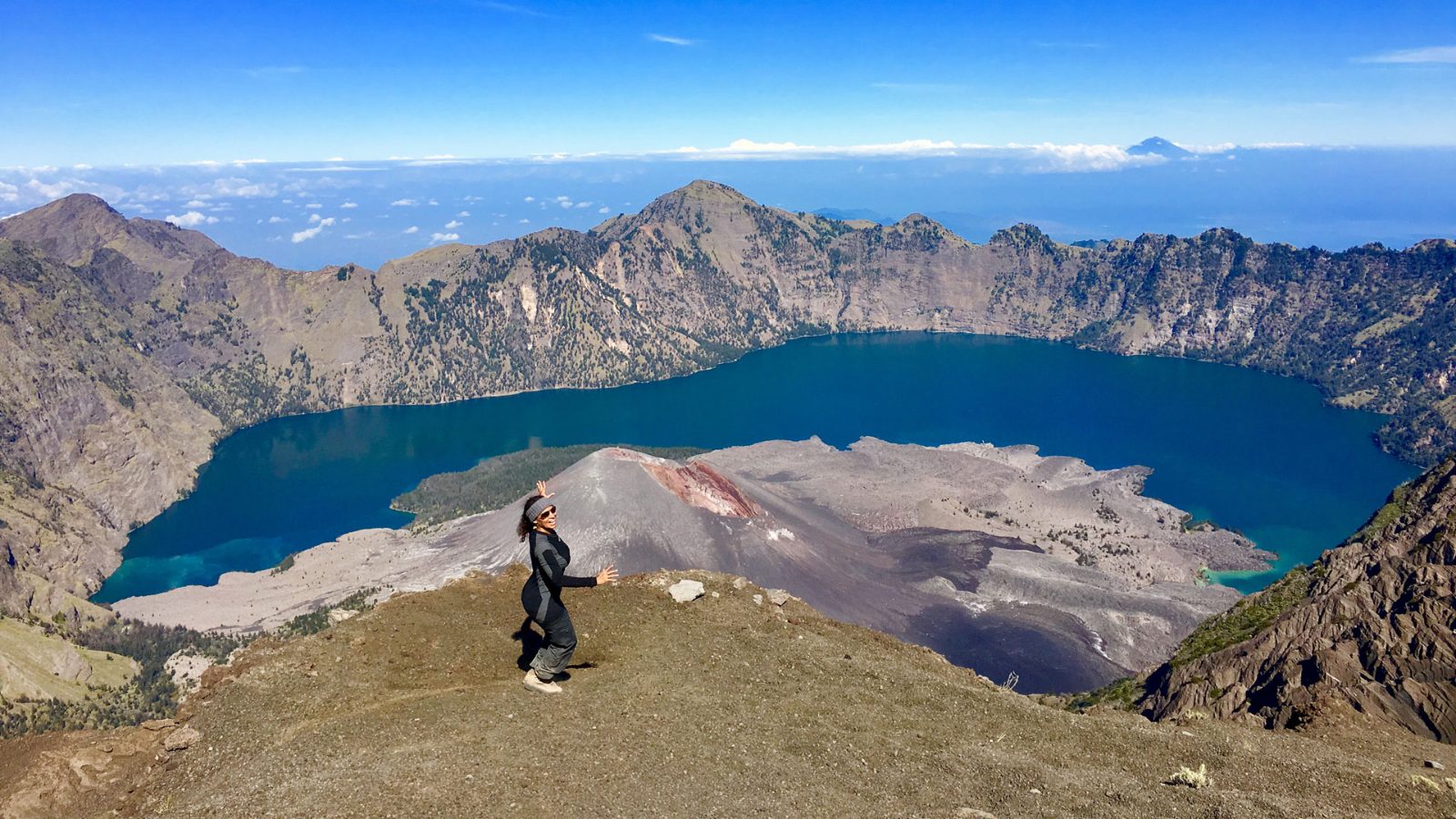
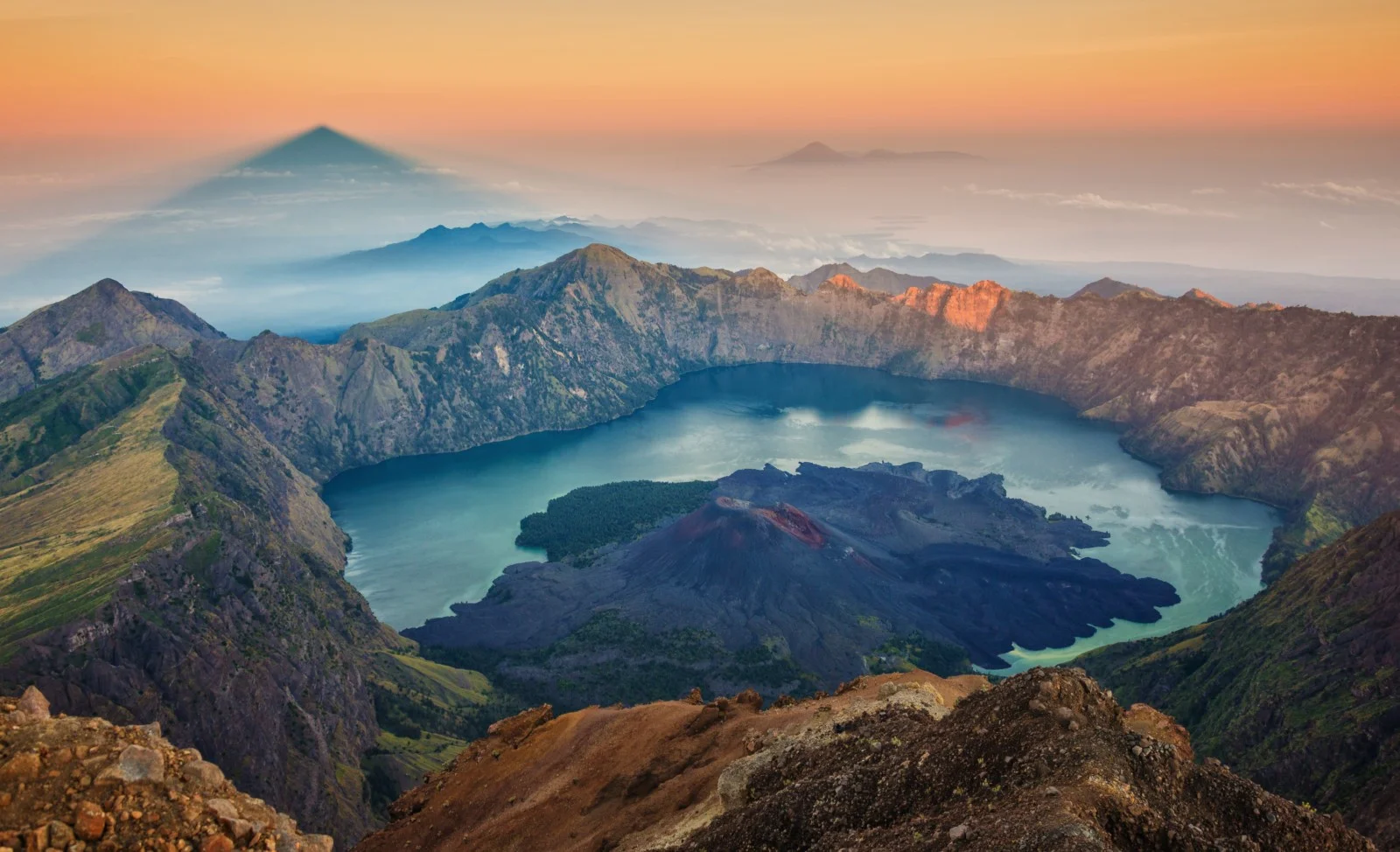
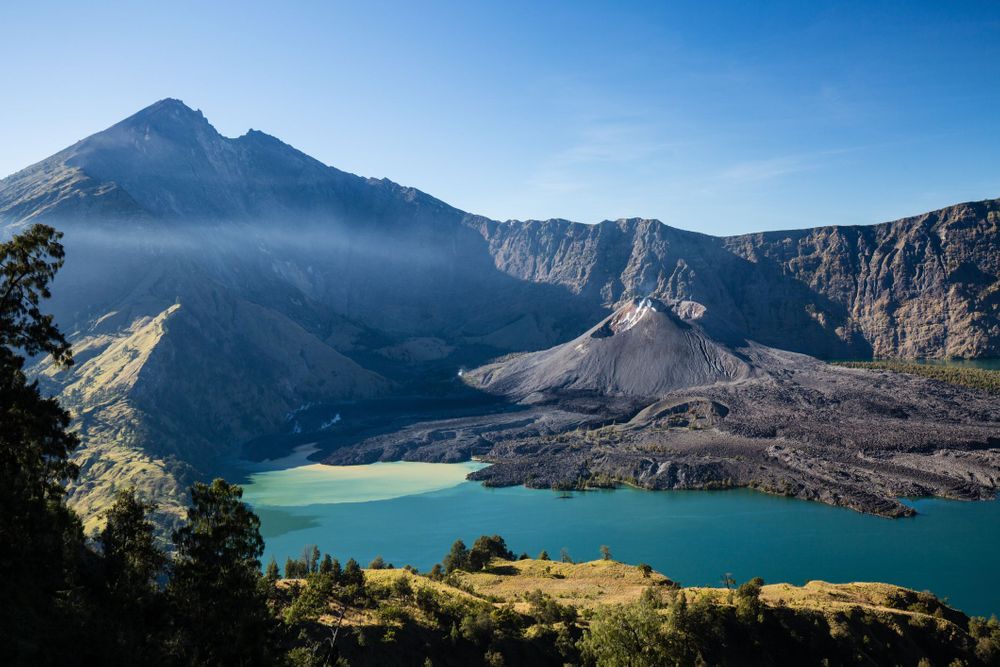
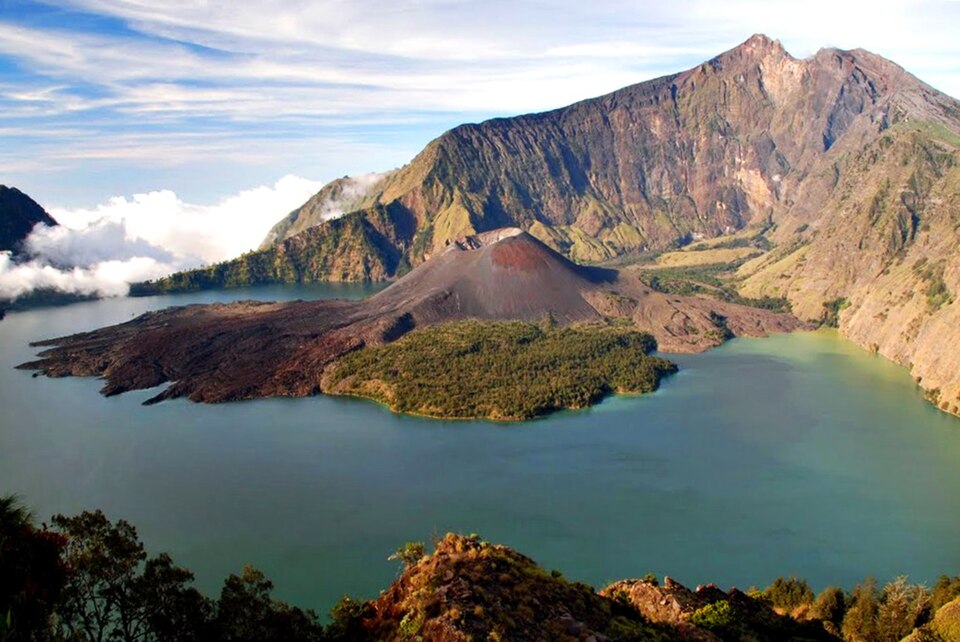
A crescent-shaped caldera lake sitting around 2,000 m elevation, fed by hot springs on its eastern shore and prized by trekkers for fishing carp introduced decades ago.
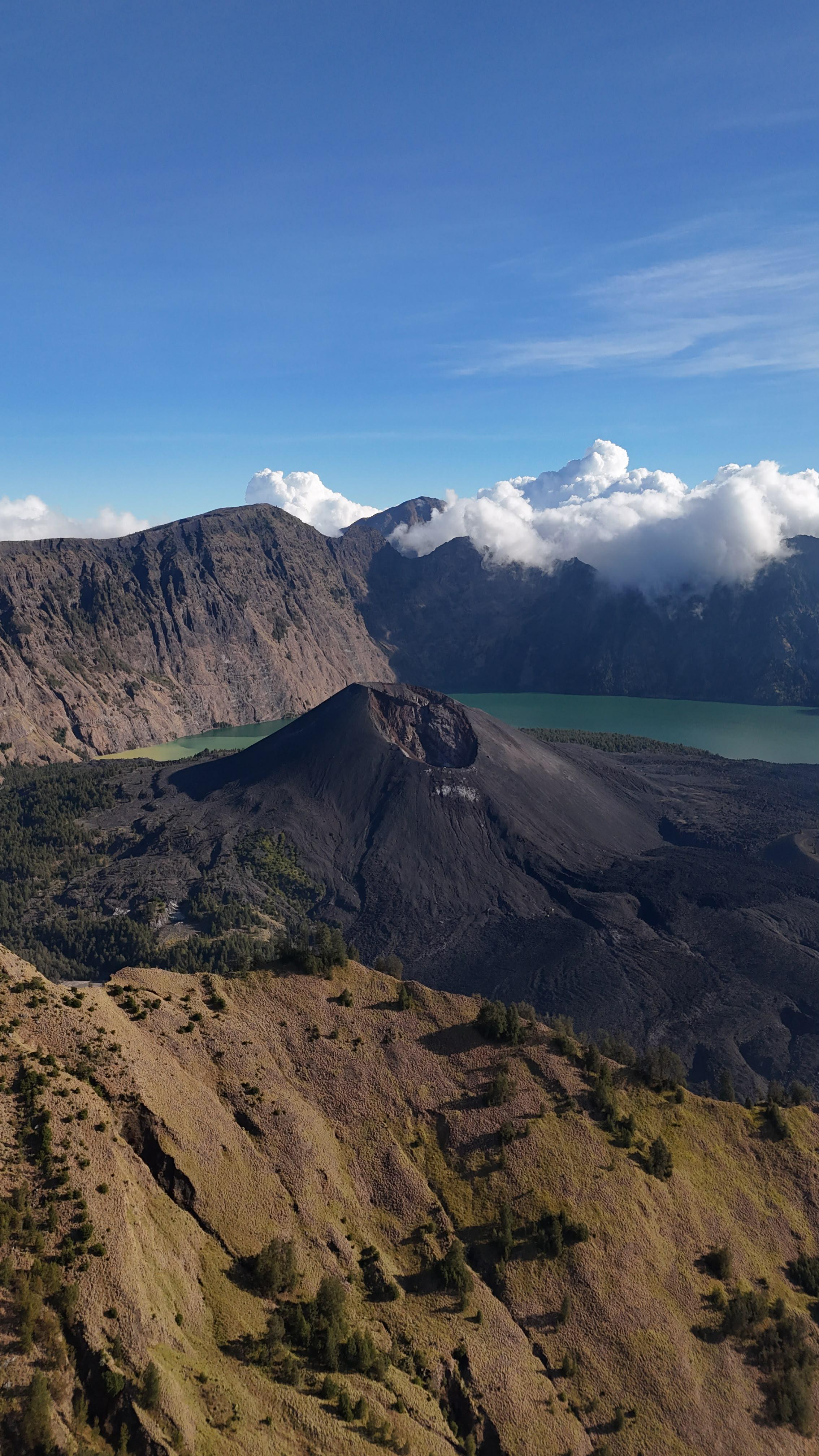
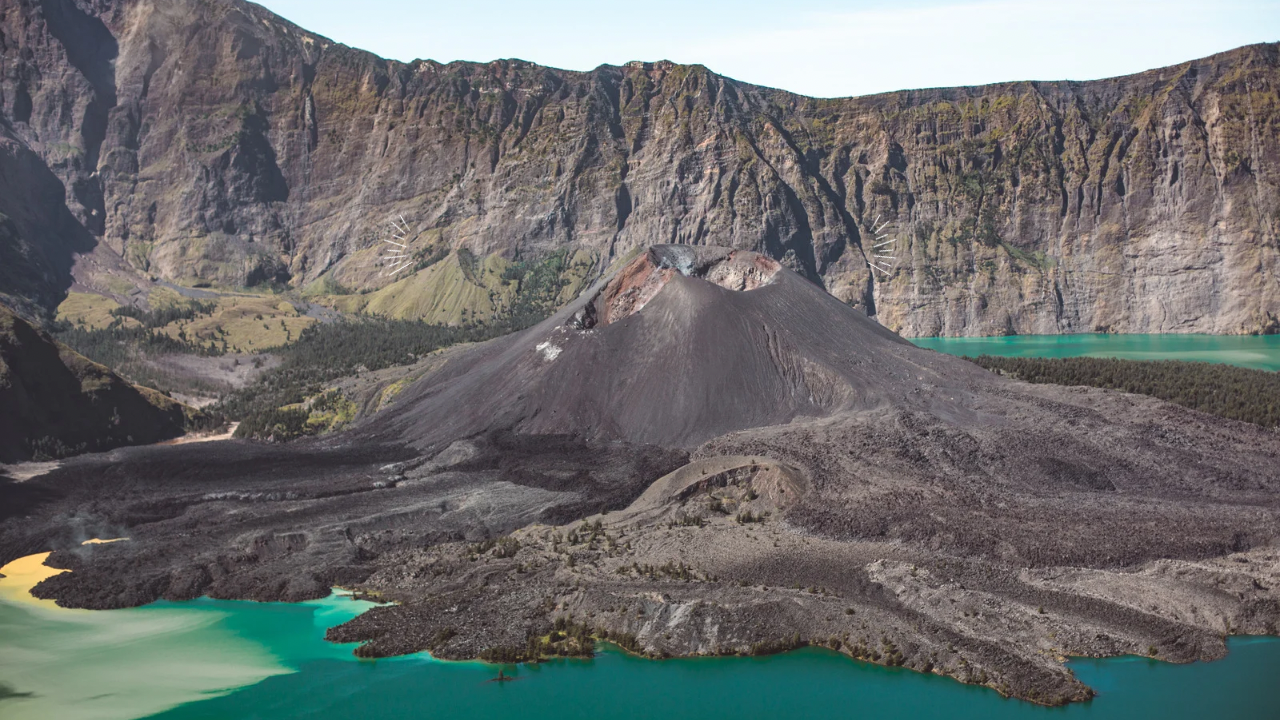
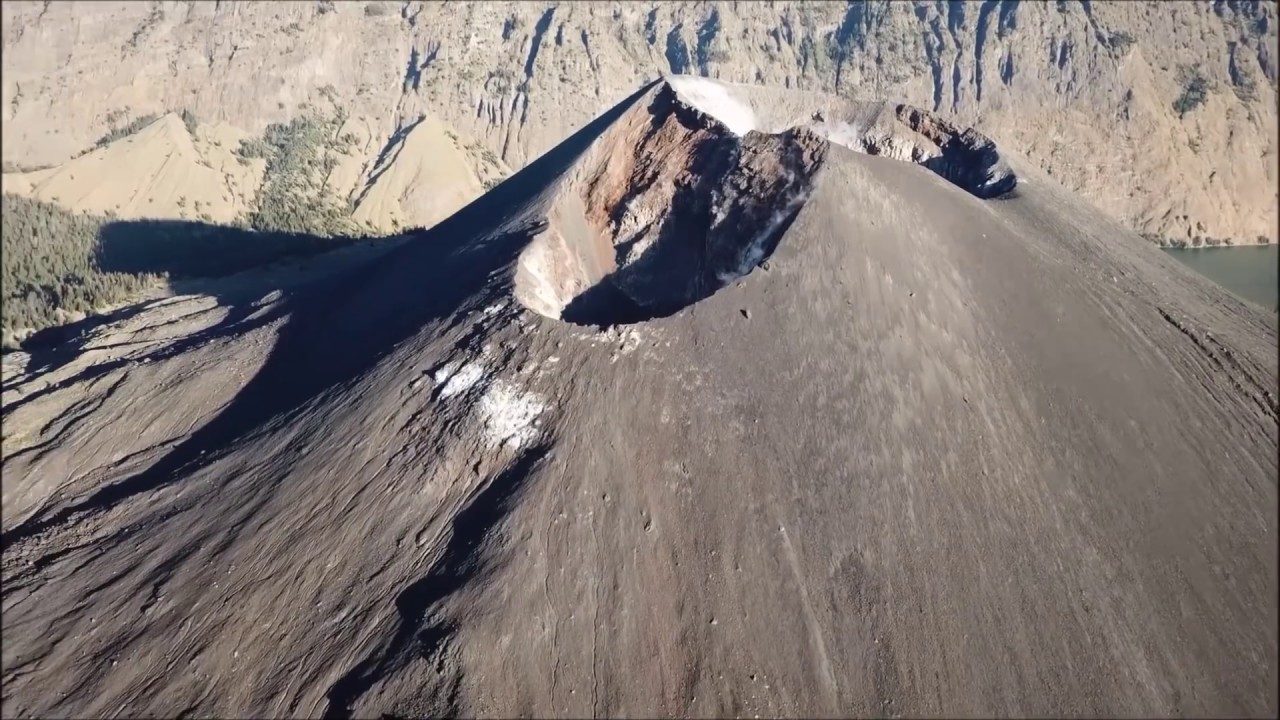
A younger volcanic cone that rose from the caldera floor and last erupted in 2016, sending ash across northern Lombok.
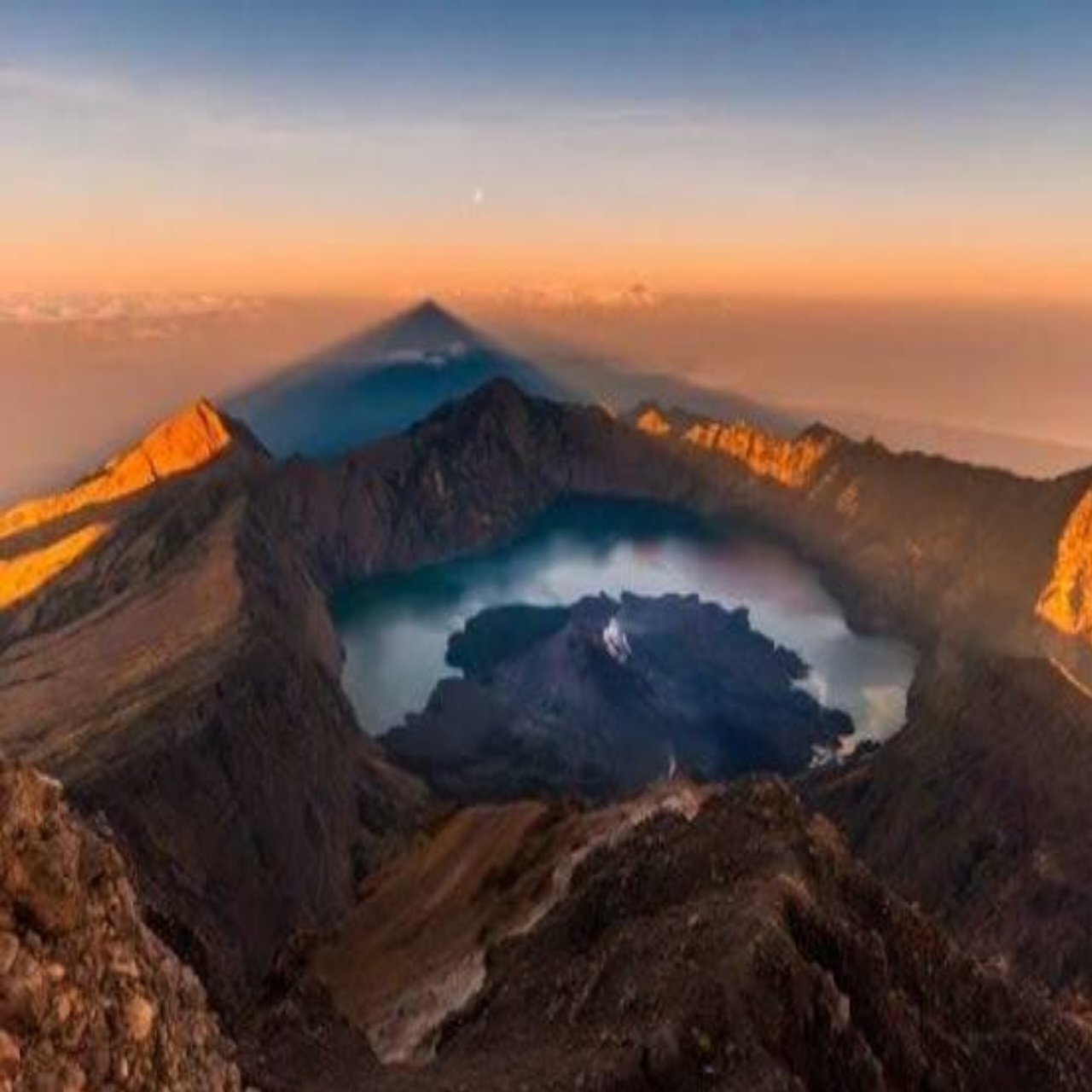
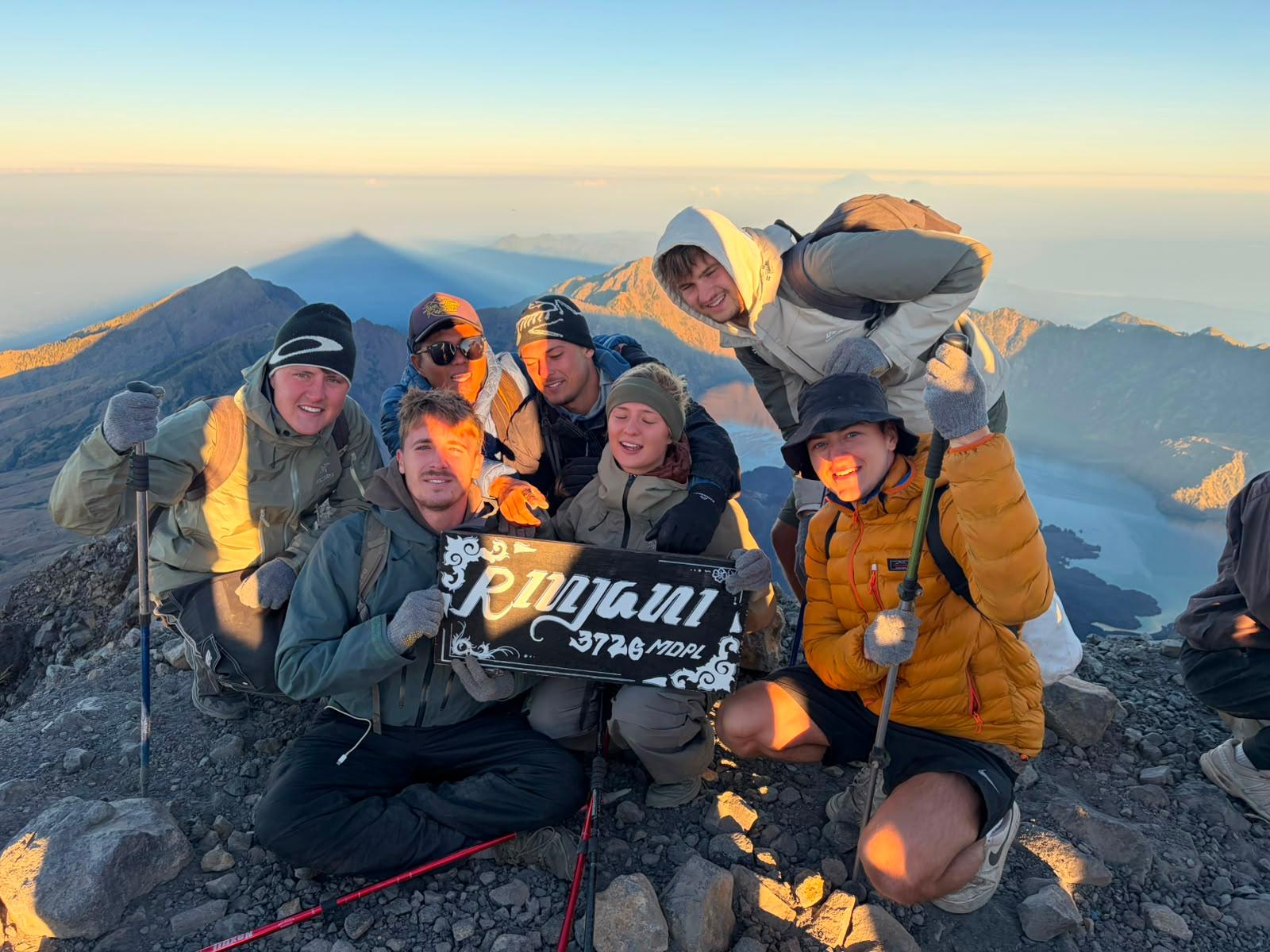
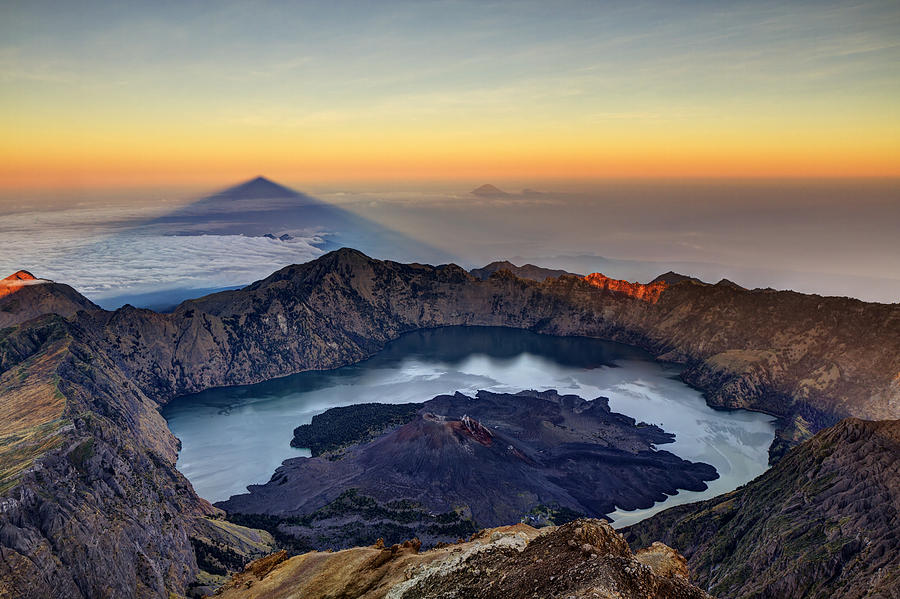
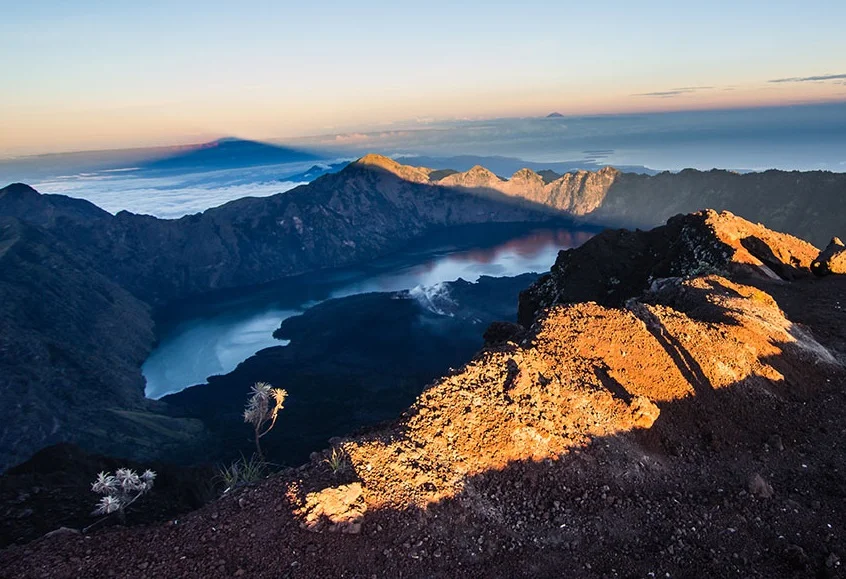
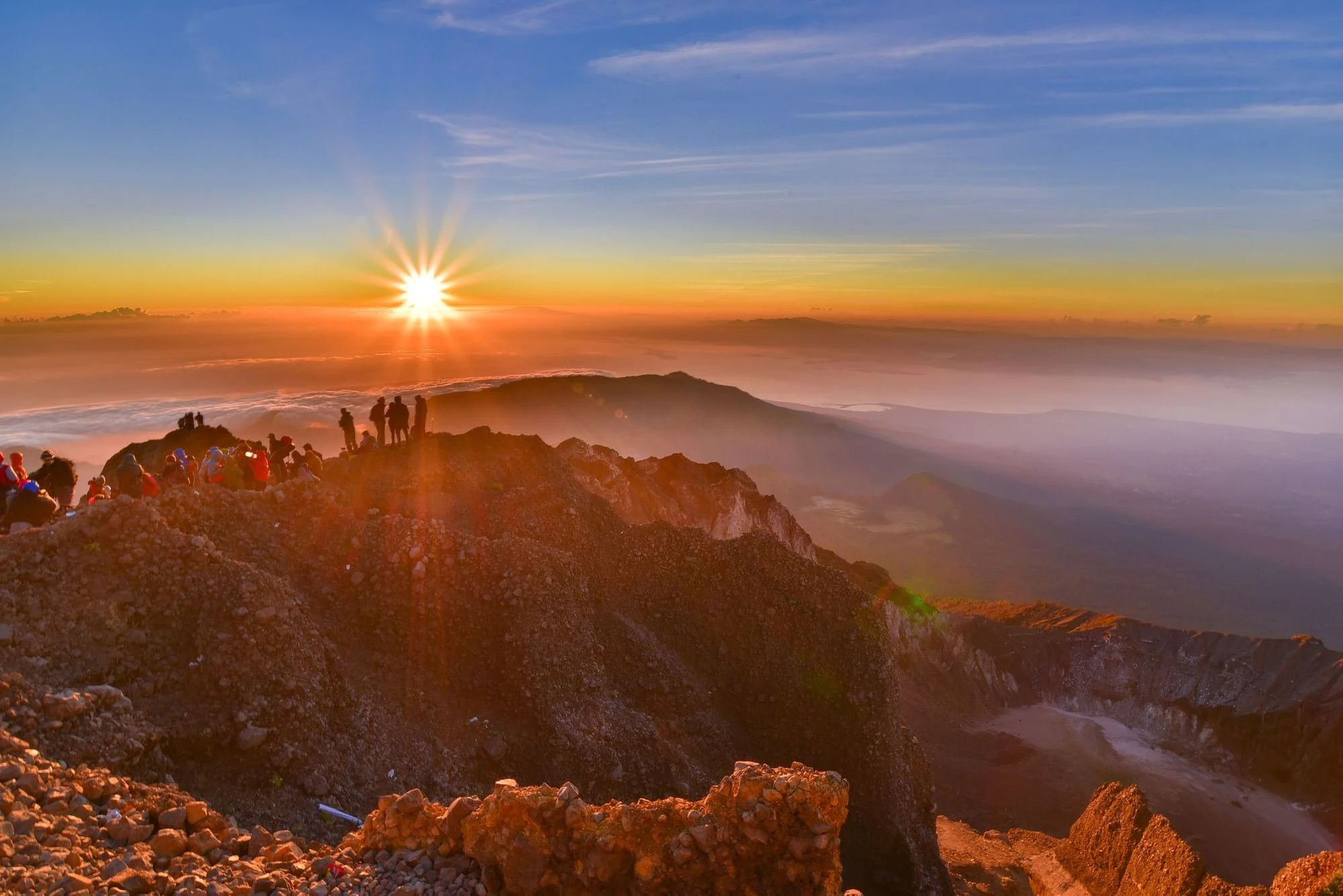
The 3,726 m summit point reached via a steep pre-dawn scree climb, offering views across Lombok and toward Bali's Mount Agung on clear mornings.
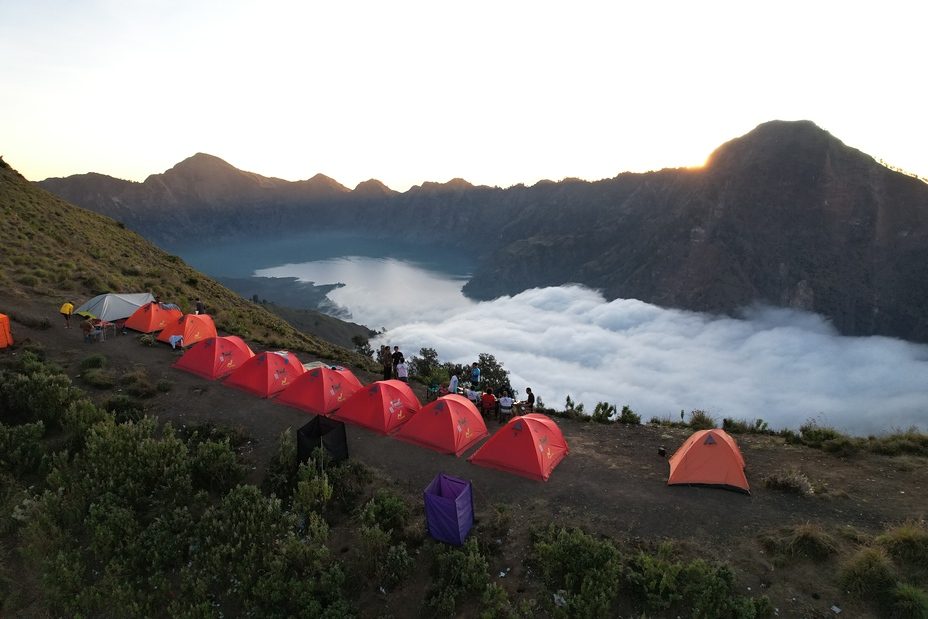
A grassy plateau campsite perched on the crater rim, used as the staging point for the overnight summit push.
A ridgeline lookout roughly 2,639 m up that gives the first full view down into the caldera and lake below.
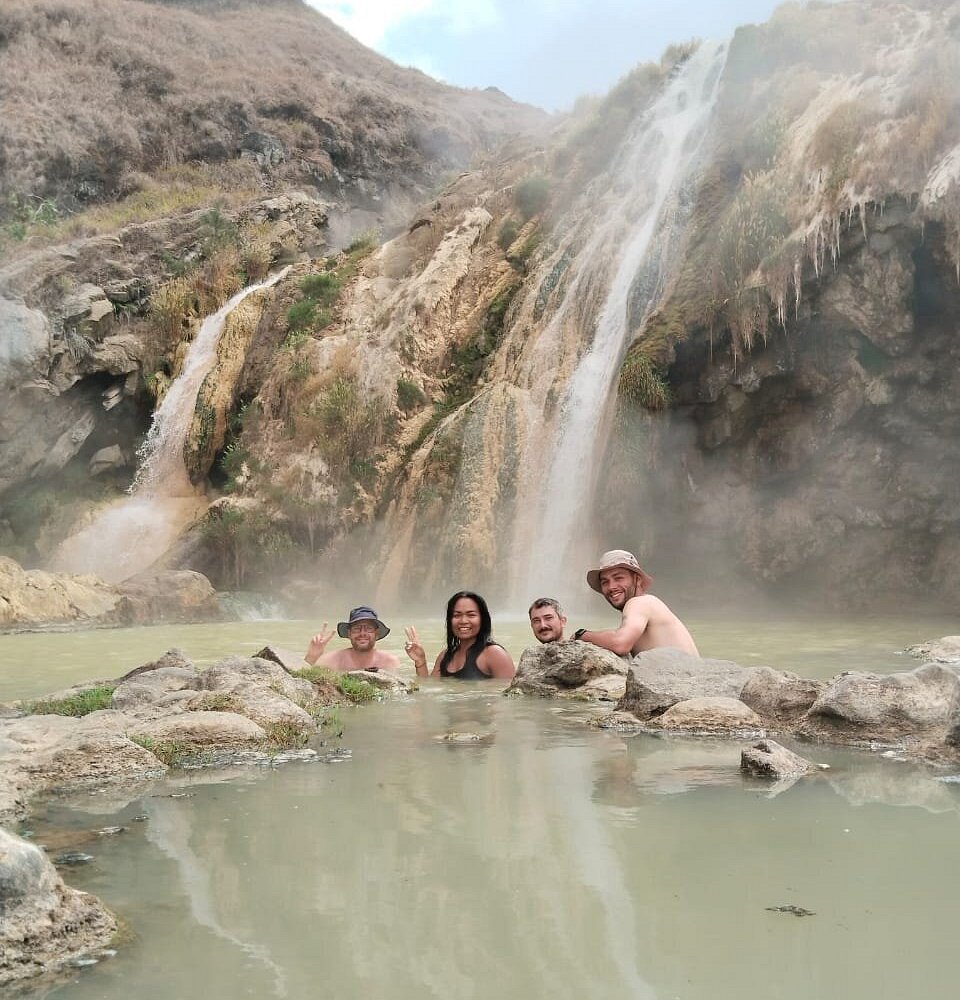
Natural hot springs along the crater lake shoreline where trekkers soak sore muscles after the descent from the rim.
You register at the Sembalun gate by mid-morning, the grassland trail stretching toward the ridgeline as porters distribute loads and confirm your group's camp allocation. The first leg climbs steadily through savanna, altitude announcing itself in shorter breaths as you pass 2,000 metres and the tree line falls away.
By late afternoon you reach Plawangan Sembalun at 2,639 metres, the crater rim camp where you'll sleep before the midnight summit push. Dinner is served at sunset, the caldera glowing below as you hydrate and set an alarm for 01:00.
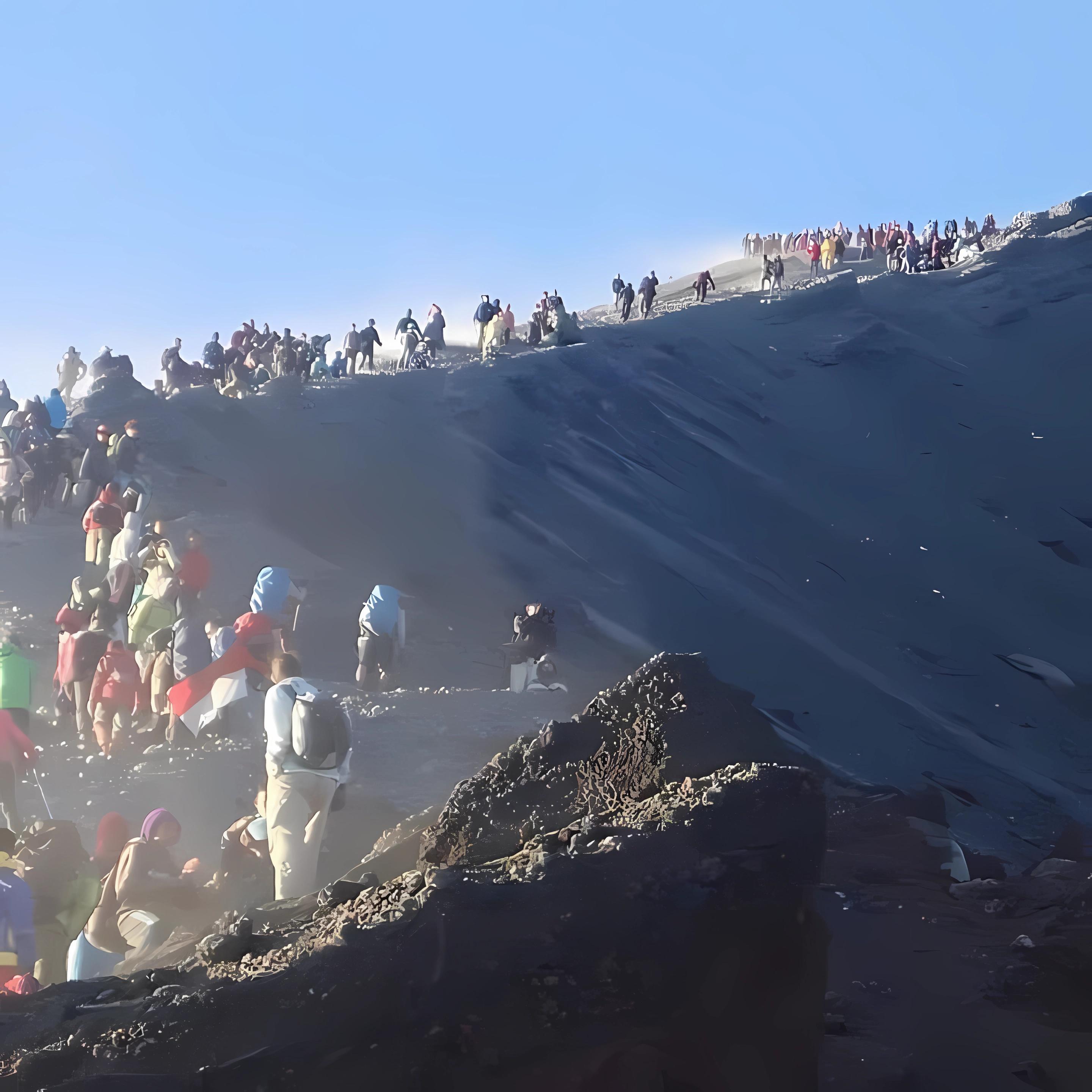
The summit ascent begins in darkness, headlamps tracing the scree slope in single file as guides call out footholds. Loose volcanic sand slides underfoot, each step forward yielding half a step back, and the thin air turns your pace deliberate. You crest the rim as dawn breaks, the peak marker at 3,726 metres framing views across Lombok, Bali, and Sumbawa. After an hour at the top you descend to Plawangan, then continue down the inner caldera wall to Segara Anak. The trail switchbacks through pumice and hardened lava, steep enough that you lean into trekking poles. At the lakeshore you wade into the hot springs, sulfur-warmed water pooling where geothermal vents meet the lake's cold edge, the active cone of Gunung Baru Jari steaming across the water.
Todos los detalles de tu próxima aventura en un solo lugar
Mount Rinjani rises 3,726 metres above Lombok, its caldera cradling Segara Anak — a crescent lake formed when the summit collapsed 13,000 years ago. The Sasak people regard the volcano as sacred, and annual pilgrimage ceremonies at the crater rim continue traditions older than any written record.
Gunung Rinjani National Park, gazetted in 1997, protects 41,330 hectares of montane forest, sulfur vents, and the geothermal springs that feed the lake's eastern shore. The conservation fee — 150,000 rupiah per person per day — funds trail maintenance, porter welfare programs, and wildlife monitoring across the park's four ecological zones.
Two principal routes reach the summit. The Sembalun trail begins at 1,150 metres on the volcano's eastern flank, climbing through open grassland and offering unobstructed views of the ridgeline. The Senaru approach starts lower, at 601 metres, threading through dense forest before emerging onto the scree slopes below Plawangan Sembalun. Most mount rinjani trekking package itineraries use one route for ascent and the other for descent, creating a loop that touches the crater rim, the lakeshore, and the hot springs in a single journey. Summit attempts begin between midnight and two in the morning, timed to reach the peak at dawn when cloud cover is minimal and visibility extends to Bali's Mount Agung and Sumbawa's Tambora.
The crater lake sits 600 vertical metres below the rim, accessible via steep switchbacks that drop through pumice fields and hardened lava flows. At 2,000 metres elevation, the lake's turquoise water reflects the inner caldera walls, and the active cone of Gunung Baru Jari rises from the southern shore, venting sulfur continuously since its formation in 1994. Natural hot springs emerge where geothermal water meets the lake's cold runoff, creating pools used by trekkers to ease altitude fatigue. Multi-day mount rinjani trekking package tours allocate between two and four days depending on summit inclusion, with porter-supported camps at Plawangan Sembalun, the crater rim, and the lakeshore. Registration opens at 08:00 at either trailhead, and the park advises starting by 10:00 to reach the first camp before afternoon cloud cover obscures the trail.

The caldera cradling Segara Anak formed when the summit collapsed 13,000 years ago.
Wear layered clothing for a mount rinjani trekking package since temperatures swing from tropical heat at the Senaru or Sembalun trailhead to near-freezing conditions at the summit ridge before sunrise. Sturdy trekking boots with ankle support are essential on the volcanic scree above the crater rim, and a warm hat plus gloves are needed for the pre-dawn summit push.
Trekkers register at the ranger post at either trailhead, where guides check permits and porters organize communal gear into carry loads. There are no metal detectors or bag scanners, but rangers may inspect packs for banned single-use plastics before allowing entry onto the trail.
Personal cameras, phones and drones are permitted along the trail and at Segara Anak crater lake, though TNGR park authorities require a separate permit for commercial drone filming. Photography at the summit is weather-dependent, since cloud cover often rolls in after mid-morning.
Children under about 10 are generally discouraged from the multi-day summit route because of the altitude gain and exposed scree slopes near the crater rim, though older teens in good condition regularly complete a mount rinjani trekking package with a licensed guide. Families often choose the shorter Senaru-to-crater-lake itinerary instead of pushing to the 3,726 m summit.
The trail to Segara Anak crater lake and the summit is a steep, unpaved volcanic path with loose scree and no accessible surfaces, making a mount rinjani trekking package unsuitable for wheelchair users or those with limited mobility. Porters can assist with gear but cannot carry trekkers, and there is no vehicle or cable access beyond the Senaru or Sembalun ranger posts.
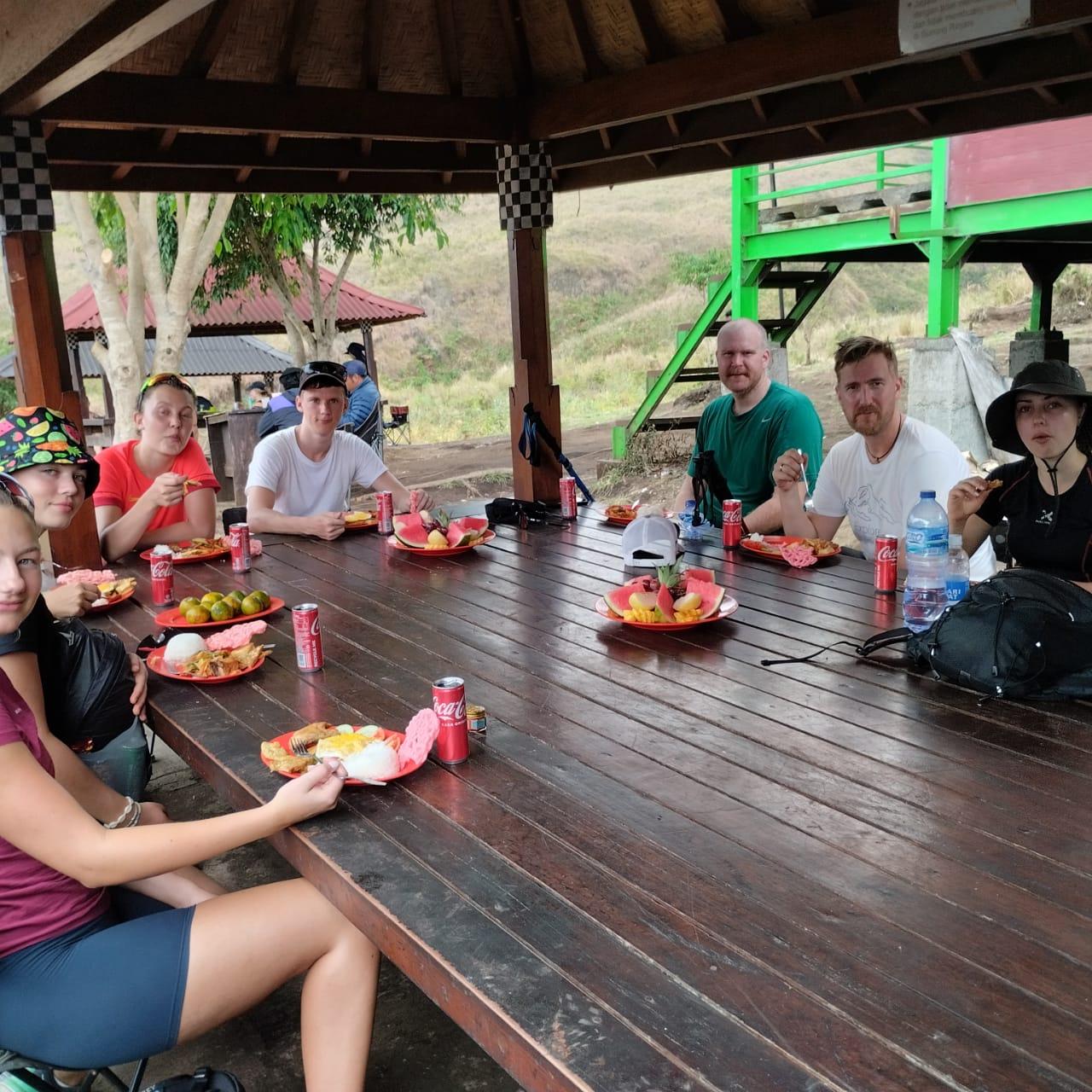
Trekkers may carry their own snacks and refillable water bottles onto the trail, and porters typically carry communal cooked meals prepared at camp using gear packed in from the trailhead. Glass containers and styrofoam packaging are barred by park rules, and all food waste must be carried back out since there are no bins along the route.
Registration desk busiest early morning
Mid-week, fewer groups on trail
Weekend groups begin arriving
Busiest gate day, longer registration queue
Gate hours
08:00–17:00 daily at Senaru and Sembalun ranger posts
Trailheads
Senaru or Sembalun village, Lombok, West Nusa Tenggara
Terrain
Steep volcanic trail, not wheelchair accessible
Arrival window
08:00–10:00 registration before trekking
Porters
Available at both gates for porter-carried gear
Car · 2-3 hours · 300,000-500,000 IDR
Private car or rental from Mataram or Senggigi to Sembalun or Senaru village, roads are paved but winding through highland terrain
Public transport · 4-5 hours · 50,000-100,000 IDR
Local bemo minibuses run from Mataram to Bayan then onward transport to Senaru, with limited daily departures
Taxi · 2.5-3.5 hours · 400,000-600,000 IDR
Metered or app-based taxi from Lombok International Airport direct to either trailhead village
Most operators selling a mount rinjani trekking package require cancellation at least 7 days before departure for a partial refund, since porters, guides and camping permits are booked in advance. The 150,000 IDR TNGR conservation fee per person per day is non-refundable once the permit is issued at the gate.
Recommended time
2-4 days (multi-day trek)
A mount rinjani trekking package is not a single-day visit: most itineraries run 2 to 4 days depending on the route and summit tier you book. Gate registration between 08:00 and 10:00 gets porters and permits sorted before the daytime ascent to camp, since trails turn slick and visibility drops once afternoon cloud cover rolls in. Add a day if you are booking a summit-and-crater-lake combination rather than a summit-only tour, and subtract a day only on shorter Senaru rim itineraries. Queues at the gate are worst right at 08:00 when multiple trekking groups register together, so early arrival still means a short wait.
Crowd levels through the day
Clima · afluencia · precio medio — los puntos pasan de verde a ámbar y rojo según sube cada indicador.
Dry season begins, trails firm up after rainy season closure, moderate crowds and clear summit views
Peak dry season with the busiest trekking period, book porters and permits well ahead, cool nights near freezing at the rim
Warm dry weather continues with thinner crowds than midsummer, this current stretch offers stable conditions before the wet season returns
Park typically closed for rainy season, landslide and lightning risk make trekking unsafe on the volcanic slopes
During July and August peak season, porters and guides for a mount rinjani trekking package get booked out weeks ahead, so reserve through a registered operator in advance.
Rim and summit camps drop close to freezing overnight even though the trailhead sits in tropical heat, so a proper sleeping bag rated below zero is worth carrying.
The Sembalun route is steeper but shorter to the summit, while Senaru passes through denser rainforest and reaches the crater lake more directly.
The 150,000 IDR TNGR conservation fee is collected per person per day at registration and card payment is not reliably available.
The volcanic scree above the crater rim is loose and abrasive, and worn boots reduce blister risk on the multi-day trek.
Since independent trekking was banned in 2015, only operators supplying a licensed guide can legally register a group at either gate.
Senaru Village, North Lombok, West Nusa Tenggara
Standard start for the crater rim route
Get directions
Sembalun Village, East Lombok, West Nusa Tenggara
Preferred for the summit route via Sembalun ridge
Get directionsMount Rinjani's modern trekking routes follow paths carved by centuries of volcanic upheaval and sacred pilgrimage. The mountain's defining moment arrived in 1257 when the catastrophic Samalas eruption—one of the most powerful in recorded history—ejected an estimated 40 cubic kilometers of material and created the caldera that now cradles Segara Anak crater lake. Geological analysis of ice cores from Greenland and Antarctica confirmed this eruption lowered global temperatures and likely triggered crop failures across Europe and Asia. The blast decapitated the original summit, leaving behind the 3,726-meter peak that mount rinjani trekking package routes ascend today. For the Sasak people of Lombok, Rinjani became a focal point of spiritual practice long before recreational trekkers arrived. Wetu Telu communities conducted annual pilgrimage ceremonies at Segara Anak, where hot springs bubble along the lakeshore and worshippers deposited offerings of gold and jewelry into the turquoise waters. Balinese Hindus also revered the volcano as the seat of Sang Hyang Widhi, establishing trails from the Sembalun side that mount rinjani trekking package tours still use. These sacred routes remained largely unchanged until 1990, when the Indonesian government formalized Gunung Rinjani National Park and installed ranger posts at Senaru and Sembalun trailheads. Commercial trekking infrastructure expanded rapidly after 1997 when the Rinjani Trek Management Board standardized camping zones and porter regulations. The 2009 eruption of Barujari—the active cone rising from Segara Anak—temporarily closed summit access and reminded operators that Rinjani remains geologically restless. By 2015, organized mount rinjani trekking package tickets included mandatory guide requirements and conservation fees of 150,000 IDR per person. Today's multi-day itineraries balance pilgrimage tradition with environmental protection, channeling thousands of annual visitors along designated corridors while preserving the mountain's dual identity as sacred site and active stratovolcano.
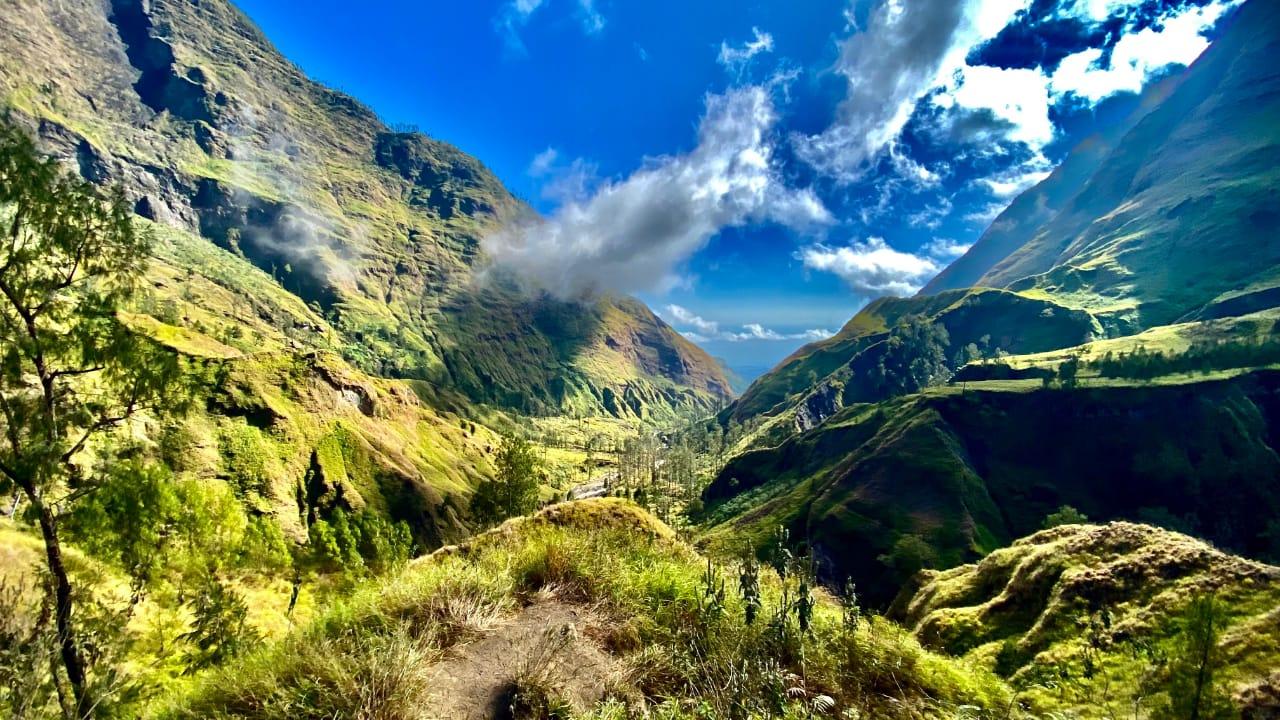
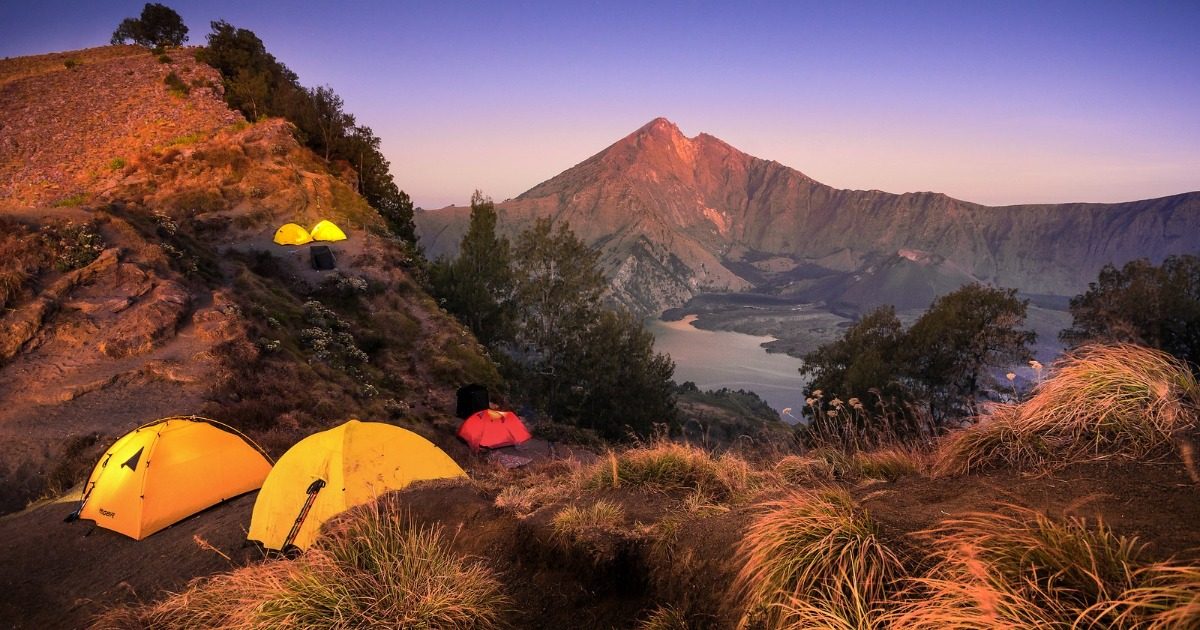
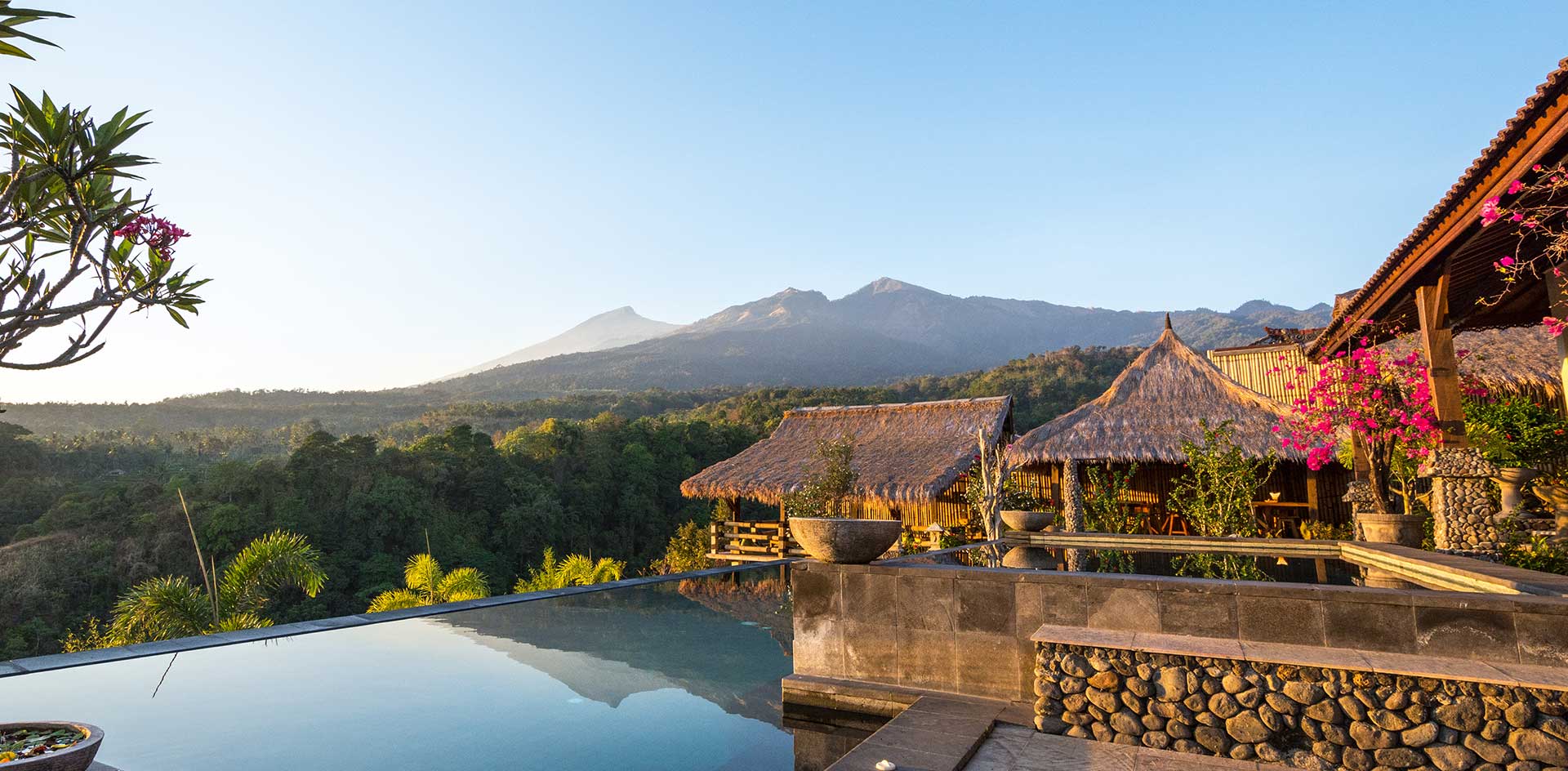
The trail crests onto this open ridge with a wide sweep of savanna hills falling away behind you and Rinjani's summit cone rising ahead. Stand near the ridge campsite tents for a foreground-to-peak composition, and note the exposed path can be windy with no shade.
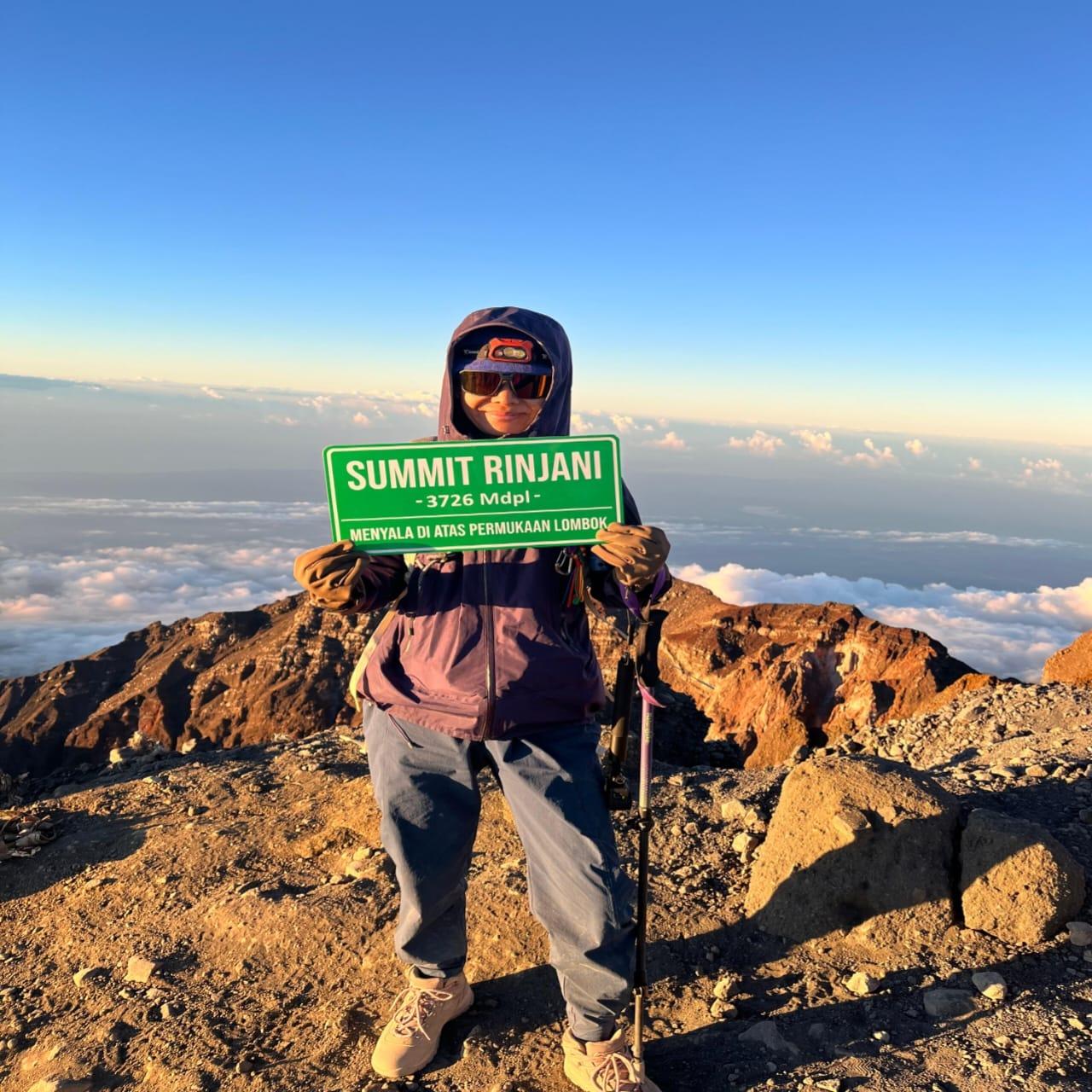
The 3,726m summit ledge delivers the classic shot: a sea of clouds below and Segara Anak's caldera rim cutting through the haze as the sun breaks over Lombok. Most trekkers on a mount rinjani trekking package leave camp around 02:00 to claim a spot on the narrow ridge before first light.
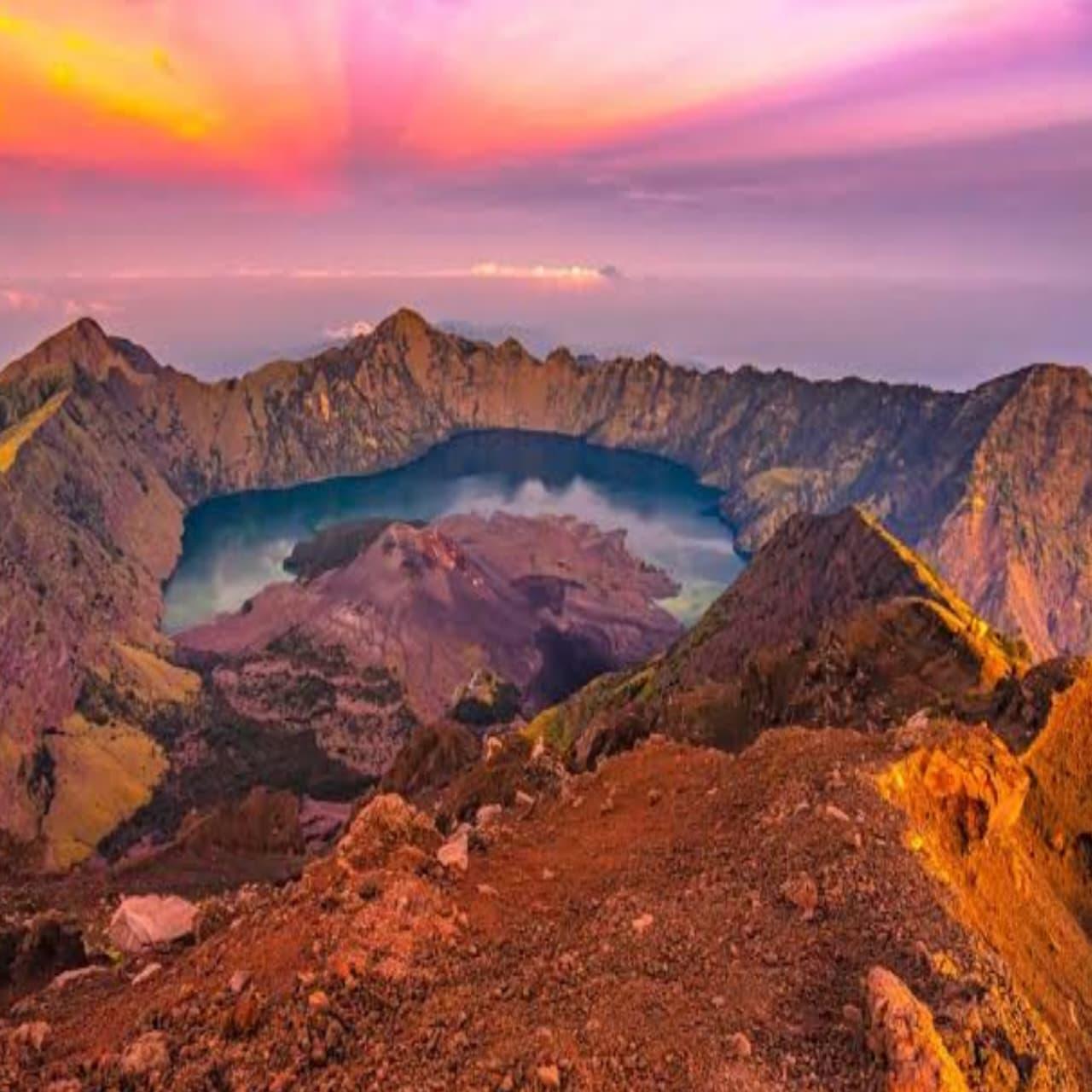
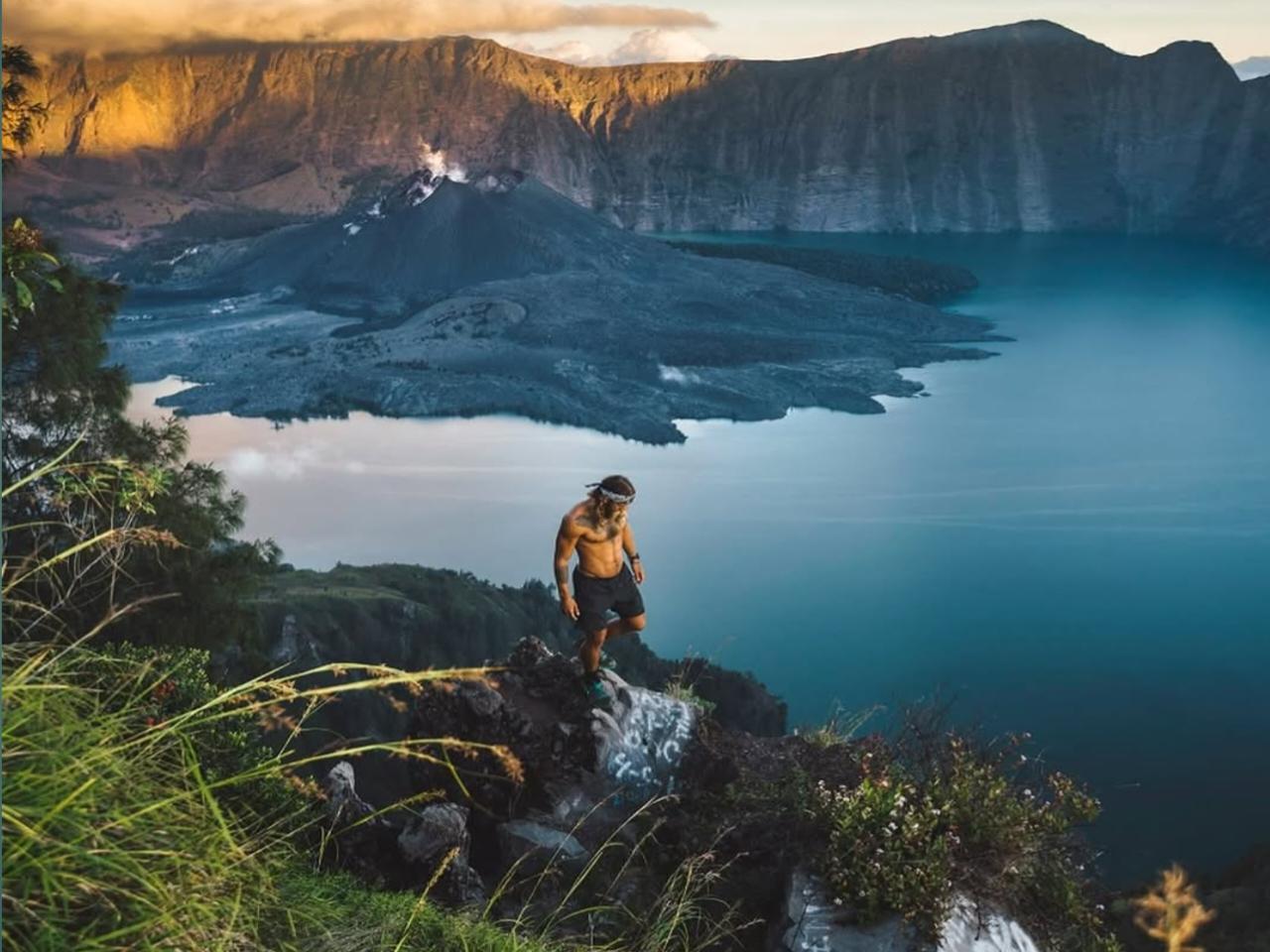
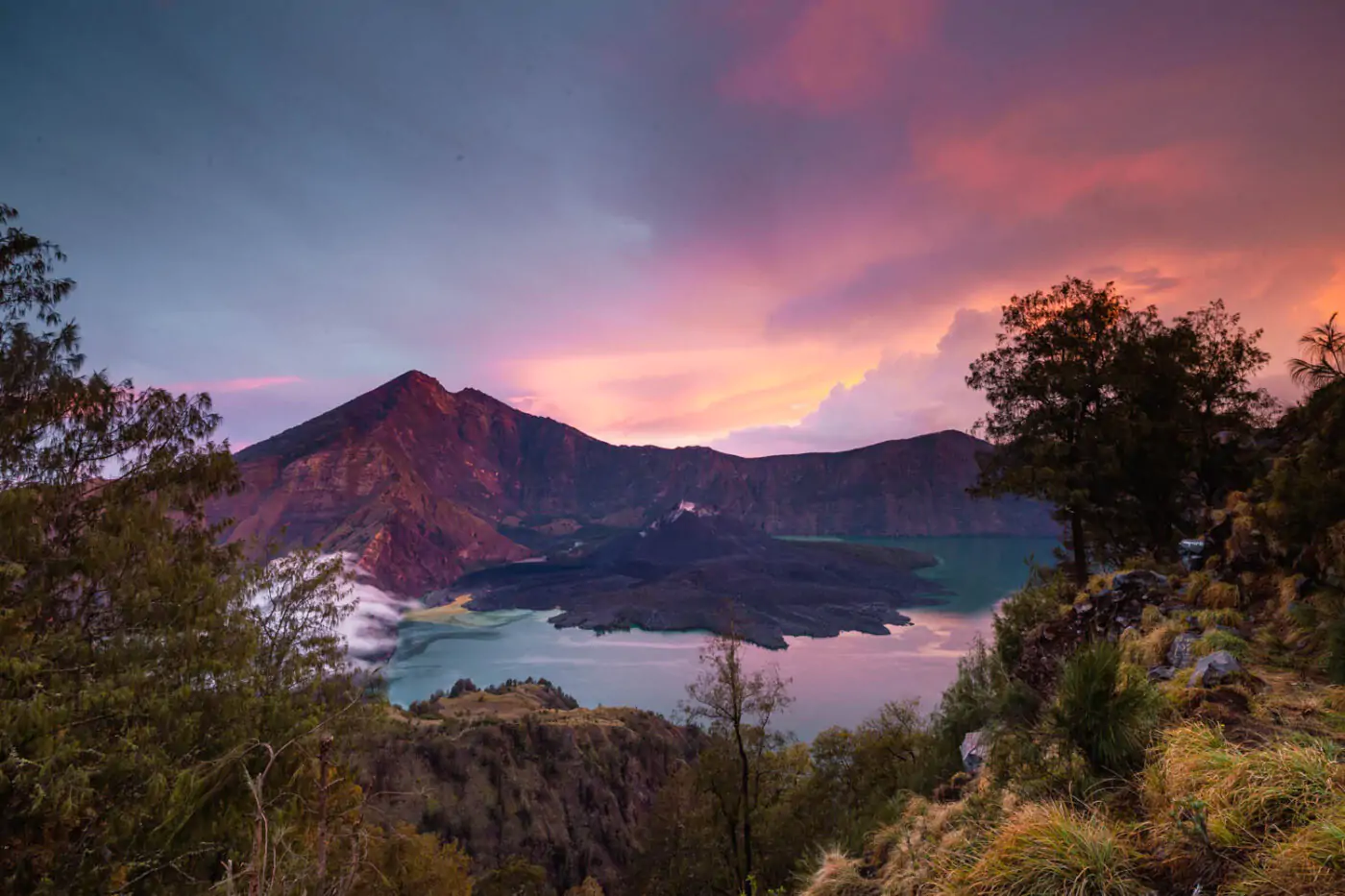
From the rim above the lake, the turquoise crater water sits framed by steep volcanic walls with Gunung Baru's active cone rising from the shoreline. The descent to the lake edge itself gives a lower, wider angle for reflections on calm mornings.
This viewpoint above the Senaru trailhead looks straight down into the caldera, with the crater lake and Gunung Baru visible in one frame against the forested slopes below. It also works as a sunset spot when cloud cover lifts.
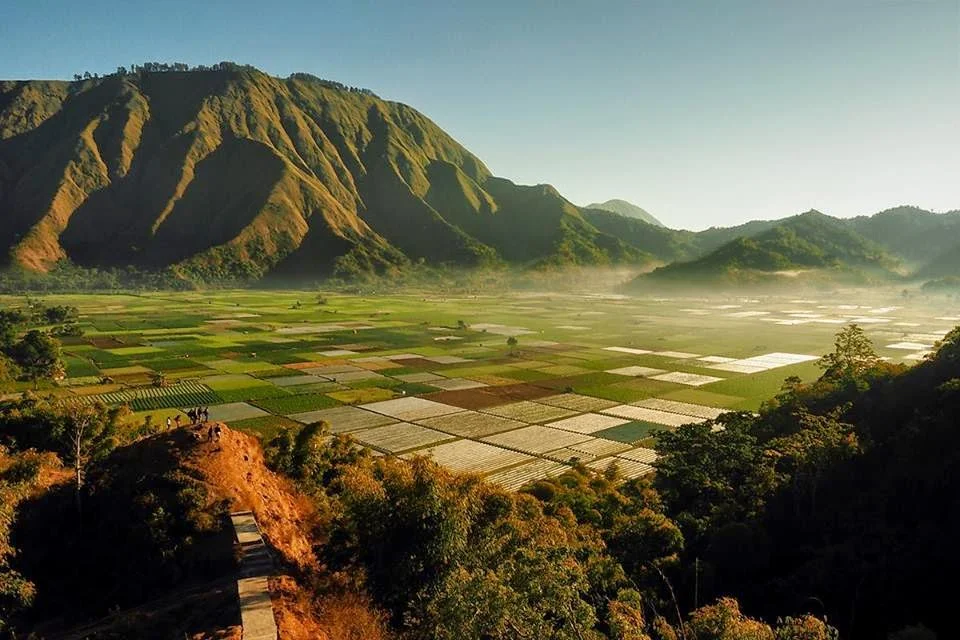
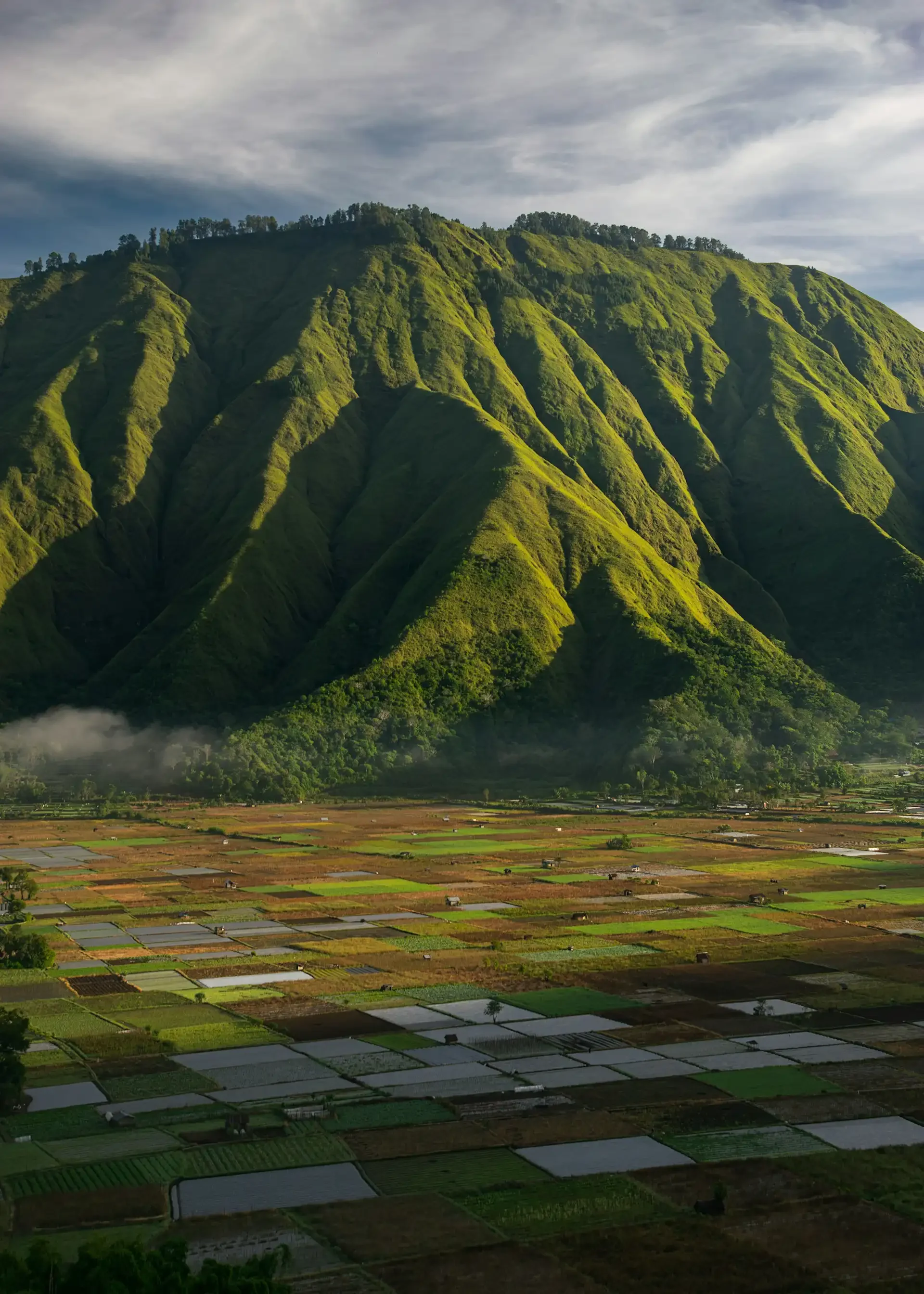
Rolling grassy hills along the early trekking route give a green, layered-ridge composition with the volcano's cone in the background. Wide shots work best from slightly off-trail where the slope opens up.
A mount rinjani trekking package is a serious multi-day mountain trek, not a casual family outing, and it only suits households with older kids or teens who already hike. Steep volcanic terrain, cold nights at altitude, and long walking days mean this is not a stroller-friendly attraction or a spot for toddlers.
Porters and guides generally expect trekkers to be at least 10-12 years old with real hiking stamina, since summit pushes involve 6-10 hours of walking on loose scoria and steep switchbacks. Younger children should stick to the lower Sembalun meadows on a shorter day trip rather than attempt the crater rim or summit legs.
There is no stroller or wheelchair access anywhere on the Senaru or Sembalun trails, which are dirt, rock, and volcanic sand from the first kilometer. Anyone trekking with a young child will need to carry them in a proper hiking backpack carrier for the full distance.
Basic toilets and simple warung-style food stalls exist at the Senaru and Sembalun trailhead gates, but there are no baby-change facilities once you pass registration. Pack your own wipes, a portable changing mat, and any diapers for the full trekking package tour since nothing is sold on the mountain itself.
Multi-day itineraries typically split the trek into a hike to crater camp, a pre-dawn summit attempt, and a descent, so families should choose a 3D2N or longer option rather than the fastest tier to leave buffer for tired legs. Building in an extra rest day at the crater rim camp makes the pace far more forgiving for kids new to multi-day hiking.
Trekking crews cook rice, noodles, and simple hot meals at camp each evening, which works well for kids used to plain food but offers little variety for fussy eaters. Bring familiar snacks and electrolyte sachets from home, since there is nowhere to buy alternatives once you start the trekking package tour.
There is no indoor backup on the mountain, so if weather turns, guides will typically hold the group at camp or delay the summit push rather than push through rain and wind at altitude. Build a spare day into the itinerary before booking so a weather delay does not force your family to skip the summit entirely.
Warungs cluster around both the Senaru and Sembalun trailheads, serving nasi goreng and soto before you set off and cold Bintang once you're back, so most trekkers skip packing extra snacks and eat local instead. A mount rinjani trekking package covers porter-cooked meals on the mountain itself, but village food is entirely separate and worth budgeting for on either end.
Simple Indonesian breakfast plates and coffee, popular with groups doing final gear checks before registration opens; gets busy around 07:00-08:00.
Roadside warung known for mie goreng and fresh juice, a common last stop before the Senaru gate; quick service suits an early departure.
Family-run spot serving grilled fish and sayur soup, favored by trekkers arriving via Sembalun for a filling meal before the ridge walk.
Basic noodle and rice dishes plus bottled drinks, convenient for a fast bite while porters finalize packs.
A short row of stalls with satay, ayam bakar and fruit; crowded at sunset when descending groups celebrate finishing their trek.
Todo lo que necesitas saber para tu viaje
Ranger posts at both the Senaru and Sembalun trailheads register trekkers daily from 08:00 to 17:00, and arriving between 08:00 and 10:00 gives groups the best chance of reaching camp before afternoon cloud cover sets in.
A mount rinjani trekking package to the crater lake is manageable for fit beginners with a licensed guide, though the full summit route involves steep scree and an overnight push best suited to trekkers with some hiking experience.
The TNGR conservation fee is 150,000 IDR per person per day at the weekday rate, collected in cash at gate registration before starting the trail.
Pack trekking boots, a headlamp, a warm jacket for summit night, a refillable water bottle, rain cover, trekking poles, sun protection and cash for the entrance fee.
Children under roughly 10 are usually discouraged from the summit route due to altitude and exposed terrain, but older teens often complete the trek with a guide on the shorter crater lake itinerary.
Personal cameras and phones are fine, but drone filming requires a separate permit from TNGR park authorities.
September through November offers stable dry weather with thinner crowds than the July-August peak, making it a solid window for a mount rinjani trekking package tour before the rainy season closure.
Layered clothing is essential since temperatures range from tropical heat at the trailhead to near-freezing conditions at the summit ridge before dawn.
Yes, trekkers can carry personal snacks and water, while porters typically carry communal cooked meals prepared at camp; glass and styrofoam packaging are not allowed.
Both trailhead villages are reachable by private car or taxi from Mataram or Senggigi in roughly 2-3 hours, or by local bemo minibus from Mataram in about 4-5 hours.
Most operators require cancellation at least 7 days before departure for a partial refund, though the 150,000 IDR per person per day conservation fee itself is non-refundable once issued.
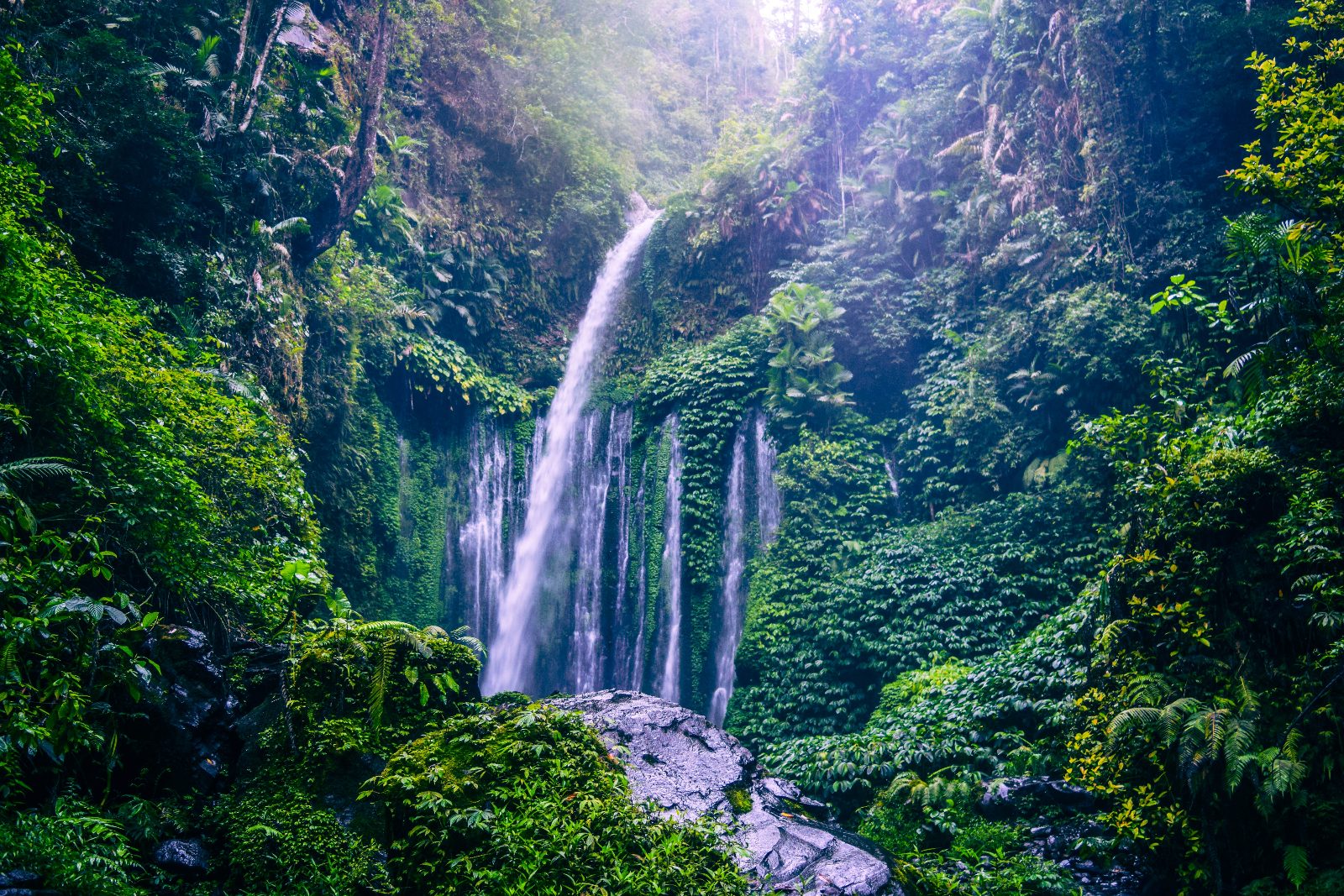
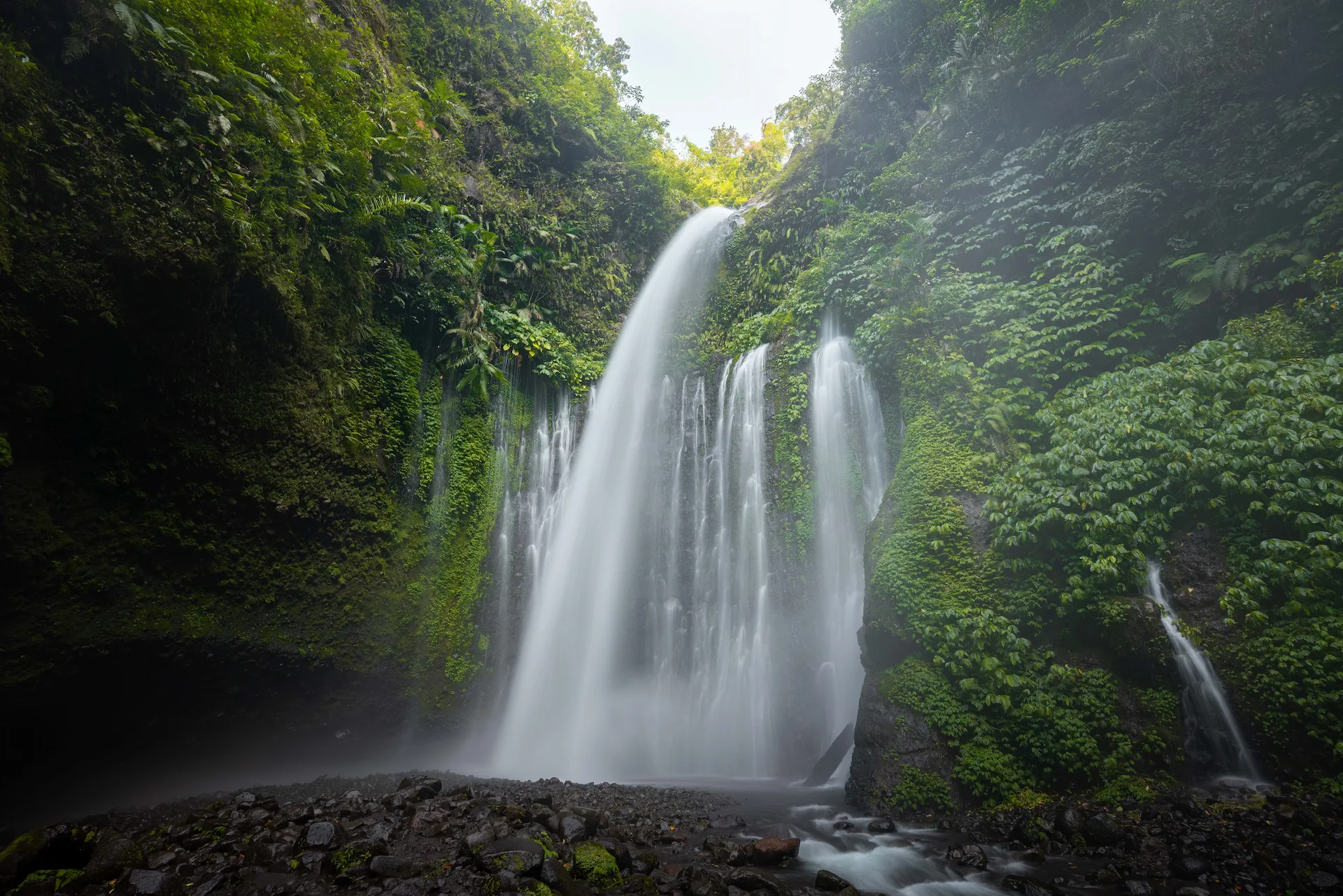
Sendang Gile and Tiu Kelep waterfalls near the Senaru gate, plus the Sembalun Valley highland farmland, make good additions before or after a mount rinjani trekking package.
Volcanic caldera lake fed by hot springs, a primary stop on the multi-day route
Active cone rising from the caldera floor that last erupted in 2016
Multi-tiered waterfall near the Senaru gate, popular pre-trek stop
Taller waterfall reached by wading through a river gorge
Highland farming valley ringed by grassy ridgelines used for acclimatization walks
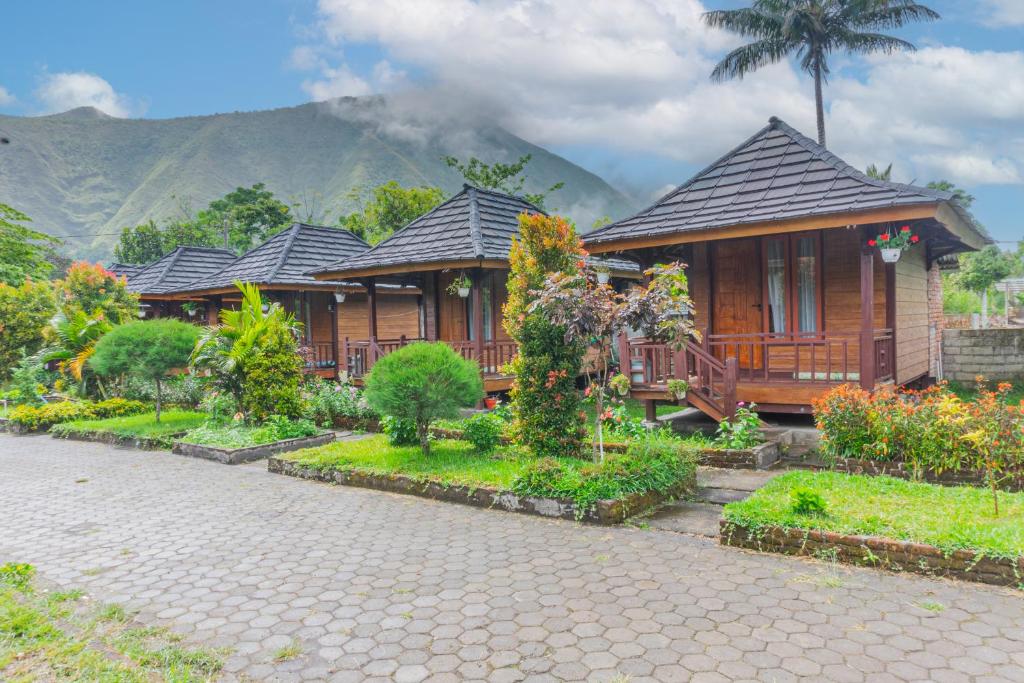
Simple guesthouses in Senaru run by local families catering to trekkers
Small lodges near the Sembalun ranger post with mountain views
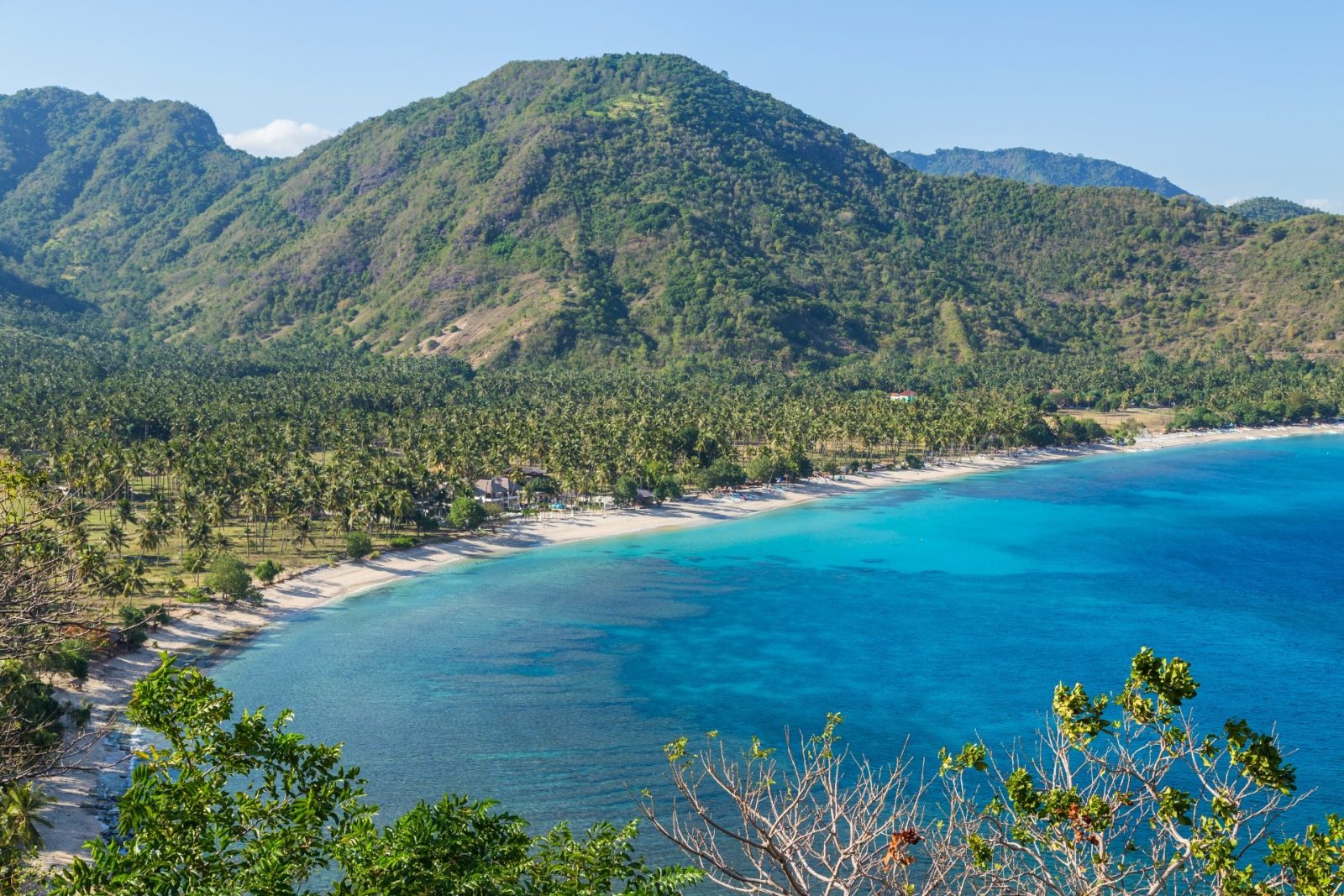
Beachfront district roughly 2 hours from the trailheads with hotel options for pre- or post-trek stays
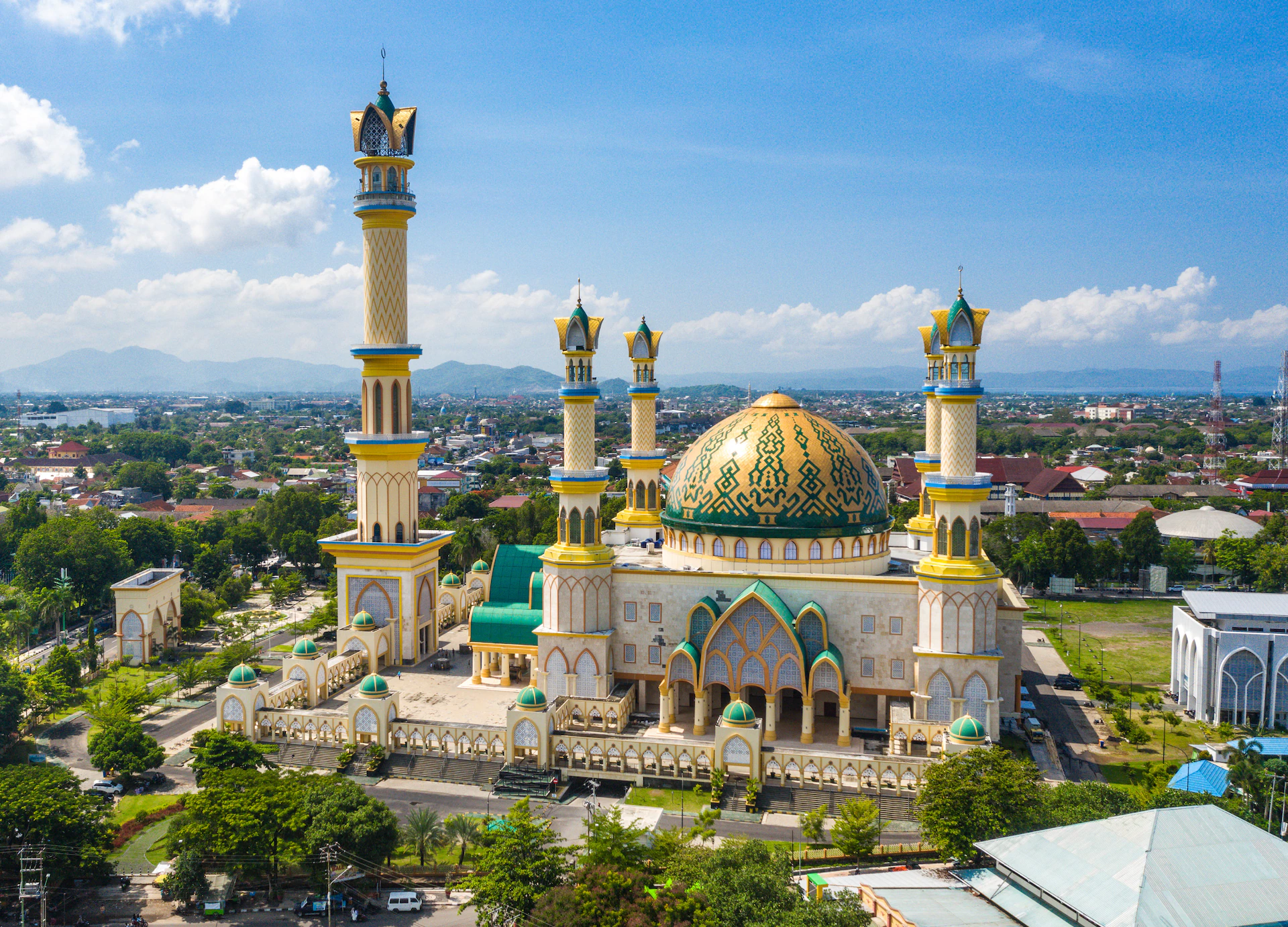
Provincial capital with airport access and a wider range of hotel tiers
Únete a miles de viajeros felices que han descubierto esta increíble experiencia
Reserva tu experiencia ahora